



ThaiBev’s Sustainability 2025
Home / Governance & Economic
Supply Chain Management
Recognizing the essential role that our suppliers play in advancing sustainability, we are committed to building a resilient, low-carbon supply chain that aligns with global climate goals. Our focus on sustainable supply chain management prioritizes the reduction of Scope 3 greenhouse gas (GHG) emissions, as they constitute the largest share of our carbon footprint.

To achieve this, ThaiBev emphasizes supplier development and strong environmental, social, and governance (ESG) integration throughout our procurement and supplier selection processes. We work closely with suppliers through tailored training and capacity-building programs, enabling them to implement effective GHG accounting and emissions reduction measures. By embedding comprehensive ESG criteria into procurement, ThaiBev ensures that suppliers not only meet environmental standards but also uphold our values of social responsibility and ethical business conduct.

The ThaiBev Supplier and Business Partner Code of Practice clearly defines expectations for responsible operations from emissions management to fair labor practices. ThaiBev screens all suppliers against ESG criteria to ensure alignment with our sustainability commitments and to mitigate risks related to environmental impact, human rights, and business ethics. Through this integrated approach, we are cultivating a supply chain that is sustainable, responsible, and fully aligned with ThaiBev’s long-term vision.
Management Approach
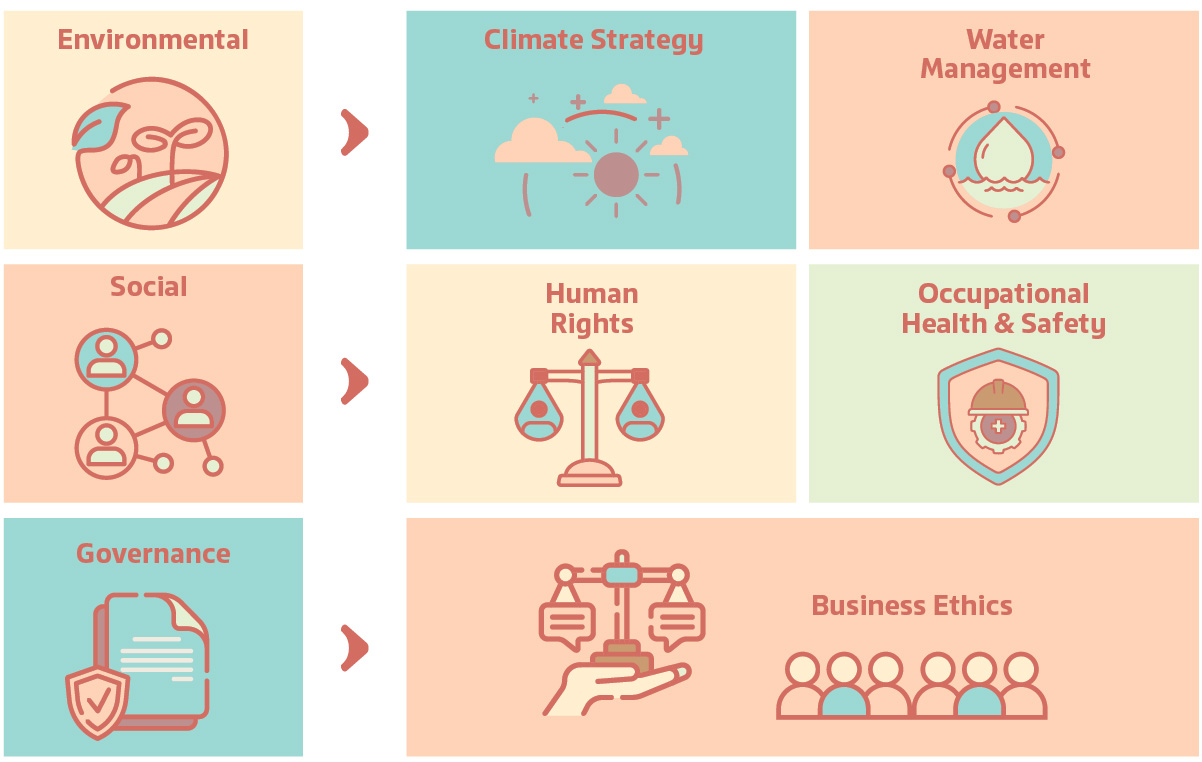
Supply Chain Management (SCM) at ThaiBev is overseen by the Group Procurement Committee (GPC), which reports to the Group CEO as well as the Board’s Sustainability and Risk Management Committee. This governance structure ensures strategic oversight of supplier engagement, ESG compliance, and Scope 3 decarbonization. Within SCM, ThaiBev focuses on five material ESG issues: Climate Strategy, Water Management, Human Rights, Occupational Health and Safety, and Business Ethics.

A key milestone for FY2025 is the expansion of ThaiBev’s ESG Compliance Framework to our international operations in Vietnam, Myanmar, Malaysia, and Singapore in addition to Thailand. This framework serves as a unified group standard, requiring all suppliers to comply with The ThaiBev Supplier and Business Partner Code of Practice as a condition for business partnership with ThaiBev. ThaiBev establishes consistent processes for Supplier Screening, Supplier Assessment, and Supplier Development, ensuring that Critical Suppliers and High ESG Risk Suppliers are identified, monitored, and continuously improved through uniform standards.

ThaiBev prioritizes collaboration with suppliers that have significant emission contributions or represent key commodities. These partners are supported in strengthening their capabilities in GHG accounting and data disclosure, enabling more accurate measurement of Scope 3 emissions and targeted reduction strategies across the supply chain. Through corrective actions and tailored development programs, ThaiBev ensures supplier progress aligns with compliance expectations and advances the company’s Scope 3 decarbonization and Net-Zero objectives.
Key ESG Issues in Supply Chain Management

Supply Chain Management Strategy
ThaiBev’s supply chain management strategy is built around three key pillars that support our long-term vision for sustainable operations:

1. Group Procurement Shared Service
ThaiBev adopts a shared-service approach that consolidates procurement activities across all business units. This centralized model enhances transparency, strengthens oversight, and ensures consistent adherence to high ESG standards throughout the supply chain. By streamlining processes and improving efficiency, ThaiBev is able to optimize resources and drive continuous improvement in supply chain performance.

2. Sustainable Sourcing
ThaiBev is committed to responsible sourcing by prioritizing suppliers who share our sustainability values. ESG considerations are embedded into sourcing decisions to reduce Scope 3 GHG emissions and promote sustainable agricultural practices. This approach emphasizes collaboration with suppliers dedicated to lowering environmental impacts, upholding ethical labor practices, and improving resource efficiency.

3. Strategic Partnership Management
Recognizing the importance of strong and enduring supplier relationships, ThaiBev focuses on building long-term partnerships that drive mutual growth and sustainability. We engage proactively with suppliers to support continuous improvement, provide development opportunities, and ensure alignment with ThaiBev’s goals for emissions reduction and social responsibility. These partnerships create shared value and enhance resilience across the entire supply chain. ThaiBev’s procurement practices are guided by core ESG objectives:

Scope 3 GHG Emission Reduction

ThaiBev recognizes that Scope 3 GHG emissions constitute the majority of our footprint, with Category 1 Purchased Goods and Services as the largest source. We mobilize supplier partnerships and embed carbon criteria into sourcing to cut emissions where they matter most, prioritizing materials with the highest intensity and contribution. Our approach is to build carbon footprint traceability using primary supplier data to track, verify, and manage the biggest hotspots. We require the Key Commodity Suppliers to disclose and execute reduction roadmaps, and link performance to sourcing decisions. These actions are the key enabler for ThaiBev to achieve Net-Zero, including Scope 3 GHG emissions by 2050.

ESG Compliance
ThaiBev embeds ESG into end-to-end procurement processes to ensure compliance and minimize value-chain impacts. The ThaiBev Supplier and Business Partner Code of Practice defines the minimum requirements expected of all suppliers. To enforce these standards, all suppliers undergo Supplier Screening, with Significant Suppliers subjected to comprehensive assessments against the ESG criteria, followed by corrective action implementation.

ThaiBev strengthens supply chain traceability by improving the completeness and quality of supplier data across tiers, enabling earlier identification of ESG risks, targeted mitigation, and more transparent reporting that supports responsible sourcing and long-term resilience.

ESG Program in Supply Chain Management
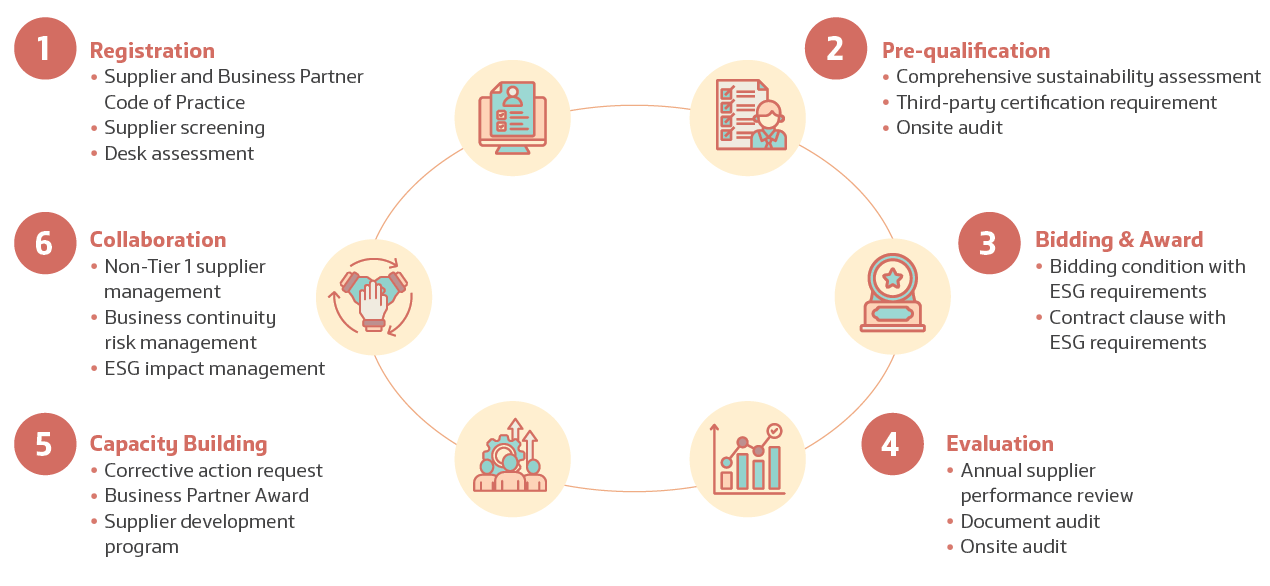
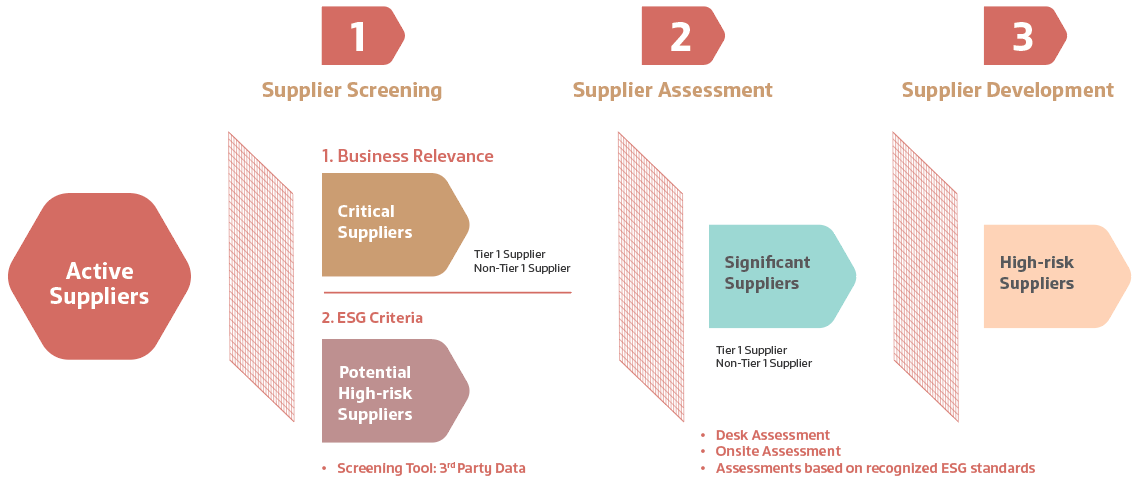
ThaiBev’s ESG Program in Supply Chain Management systematically engages suppliers through a three-step process. First, Supplier Screening evaluates active suppliers for business relevance and ESG criteria to identify Critical and Potential High-risk Suppliers. Next, Supplier Assessment involves desk and onsite evaluations of Significant Suppliers based on recognized ESG standards. Finally, Supplier Development focuses on high-risk suppliers, providing targeted support and guidance to improve ESG performance and ensure sustainable practices across the supply chain.
Targets


Overall ThaiBev Thailand Operations
  • 100% of ThaiBev Suppliers comply with Supplier and Business Partner Code of Practice by 2030
  • Net-Zero in Scope 3 GHG Emissions by 2050
  • Responsibly source 100% of our Key Agricultural Raw Materials (i.e. malt and hops, sugar, broken rice, tea leaves, and palm oil) by 2025
  • 100% of Strategic Suppliers implementing their own Supplier Code of Conduct by 2030
  • 100% of active suppliers to be assessed and examined for sustainability risks by a third party or using third-party risk databases by 2030
Definition
  • Active Suppliers are suppliers with business transactions with ThaiBev in the reporting year with a minimum aggregated annual transaction value of 100,000 Baht.
  • Strategic Suppliers are suppliers whose products or services have a high business impact on the company’s profitability and a high level of supply risks, classified using the Kraljic Matrix.
Supply Chain Management Framework
ISO 20400 Sustainable Procurement Guideline
Supply Chain Management Strategy

Group Procurement Shared Service

Strategic Partnership Management

Sustainable Sourcing
Sustainable Development Policies and Guidelines

Supplier and Business Partner Code of Practice

Sustainable Agriculture

Sustainable Packaging

GMO

Human Rights Policy

Environmental Policy
Key ESG Objectives

Scope 3 GHG Emission Reduction

ESG Compliance
ESG Integration into Supply Chain Management
Supply Chain Management Digital Platforms
INTERNAL PLATFORM

EXTERNAL PLATFORM

Key Projects

Thailand Supply Chain Network (TSCN) and Supplier Development Program
Accurate GHG accounting forms the foundation of ThaiBev’s Net-Zero strategy, enabling suppliers to quantify emissions, disclose Scope 3 data, and design effective reduction measures. Suppliers at the Beginner level within Key Commodities are prioritized for participation in the GHG Accounting Training Program delivered through the Thailand Supply Chain Network (TSCN). These sessions are co-hosted on a rotational basis by TSCN co-founders, fostering knowledge sharing, consistent methodologies, and peer learning across industries.

To complement the GHG training, TSCN has launched a series of online ESG programs covering emerging topics such as carbon tax readiness, sustainable product design and life cycle assessment, circular economy practices, extended producer responsibility (EPR), and energy transition. These initiatives strengthen supplier capability to meet evolving sustainability requirements and align their operations with Net-Zero goals.

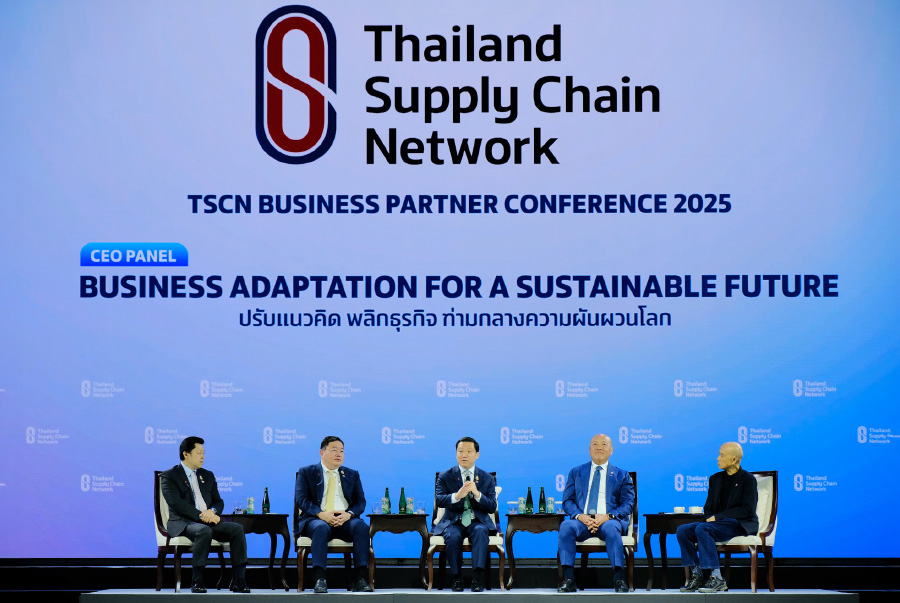
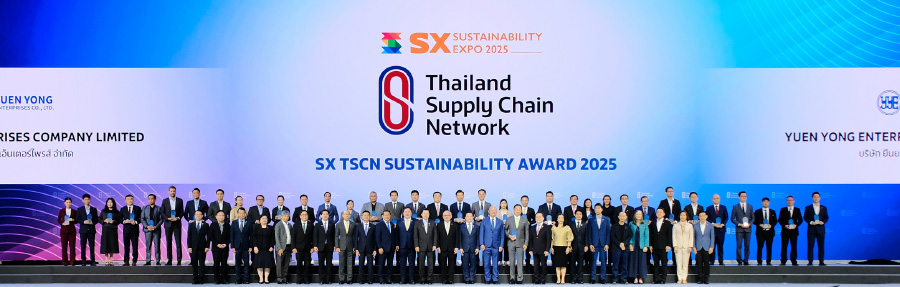
TSCN broadens its influence beyond the training program by hosting the annual Business Partner Conference, part of the Sustainability Expo at QSNCC. The 2025 conference, themed “Business Adaptation for a Sustainable Future,” built on discussions from 2024 and provided a platform for CEOs, suppliers, and stakeholders to exchange innovations and solutions.

During the event, the SX TSCN Sustainability Award, now in its second year, honored 36 outstanding suppliers for significant achievements in emissions reduction, resource efficiency, and social contributions. Selection criteria focused on quantifiable results to ensure that the recognition accurately reflects real impact. Awarded suppliers were highlighted as best practices at the TSCN exhibition and are also featured online through the TSCN Platform for public access. In 2025, the ThaiBev Business Partner Award has been expanded beyond Thailand and Malaysia to Vietnam, reflecting ThaiBev’s growing regional presence.

The award celebrates excellence and innovation while also evaluating suppliers on GHG disclosure and Net-Zero commitment. By integrating climate action into recognition, ThaiBev reinforces transparency and ambition as key indicators of supplier excellence.

Together, these initiatives demonstrate that TSCN and ThaiBev’s supplier development programs are interconnected drivers of progress building knowledge, rewarding achievement, and strengthening accountability. This collaborative approach advances ThaiBev and its entire supply chain toward achieving Net-Zero Scope 3 GHG emissions.

Supplier Classification and Engagement for Scope 3 GHG Emission Reduction
Purchased Goods and Services under Scope 3 Category 1 represent the majority of ThaiBev’s value chain emissions.Within this category, ThaiBev has identified four primary packaging materials, glass bottles, corrugated cartons, PET plastic, and aluminum cans, along with key agricultural commodities including malt, sugar, rice, palm oil, and tea leaves, as the most significant “Key Commodities” due to their high greenhouse gas intensity and critical role in our operations.

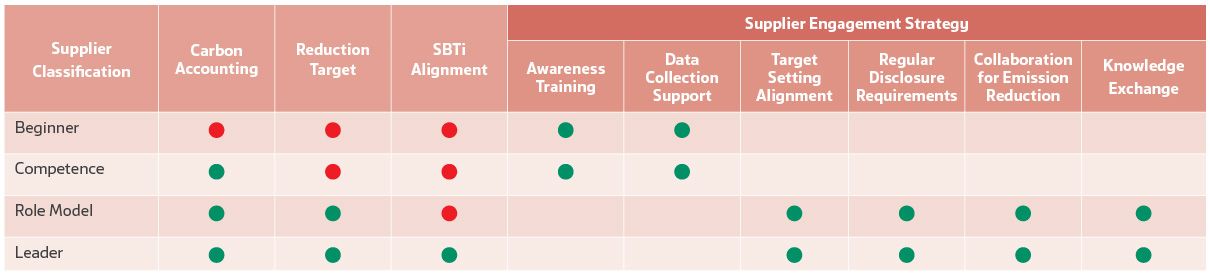
Building on this analysis, 100 percent of Key Commodity suppliers are classified into four levels according to their maturity in GHG accounting and reduction: Beginner, Competence, Role Model, and Leader. This classification framework enables ThaiBev to tailor engagement and development activities to each supplier’s level, ranging from GHG accounting training and carbon footprint benchmarking to joint development of Scope 3 decarbonization projects.

In 2025, ThaiBev’s Thailand operations mapped 100 percent of procurement spend within Key Commodities, representing 58 percent of the company’s total annual procurement spend for its Thailand operation. Among these, all Beginner suppliers have completed GHG accounting training, while 100 percent of Role Model and Leader suppliers have established Scope 3 reduction or Net-Zero targets.

This systematic approach ensures that supplier engagement not only contributes to emissions reduction but also enhances resilience and supports ThaiBev’s long-term Net-Zero pathway.
Remark: The table use green dots to indicate ‘Yes’, while red dots represent ‘No‘

Sustainable Agriculture Partnership for Climate Resilience
ThaiBev strengthens sustainable agriculture by combining responsible sourcing, supplier capability development, and water resilience across the priority farming regions with high water-stress risk. In FY2025, 100 percent of key agricultural raw materials were responsibly sourced, and supplier performance was advanced through targeted engagement and data-driven oversight.

ThaiBev sources key agricultural inputs, including malt, hops, sugar, broken rice, tea leaves, and palm oil, under internationally recognized standards such as Bonsucro, RSPO, FSA, SAI Platform, SEDEX/SMETA, and Rainforest Alliance. These requirements are embedded in supplier screening, assessment, and the bidding process to ensure responsible production and continuous improvement.

To build supplier capability where it matters most, ThaiBev provides bilateral technical support on GHG accounting and disclosure to priority suppliers. In FY2025, Cristalla, a key sugar supplier, progressed from Beginner to Competence level following a focused engagement on GHG accounting practice and data quality improvement. Beyond Tier 1, ThaiBev continued community support with non-Tier 1 farmers in sugarcane and beer value chains, focusing on practical guidance for water stewardship and soil-health-oriented regenerative practices that reduce dependence on synthetic inputs and strengthen livelihoods.

To strengthen water resilience in agricultural sourcing regions, ThaiBev partners with the Hydro-Informatics Institute (Public Organization) (HII) to use automated telemetry for water disaster monitoring and flood surveillance. The system is being extended to supplier farming areas identified as water-stressed, enabling continuous water-level tracking and more efficient water use. These actions enhance climate preparedness and protect raw-material continuity while supporting farming communities.

Together, these measures ensure that ThaiBev’s agricultural materials are responsibly sourced, performance-managed, and climate-resilient, contributing to better environmental outcomes, stronger communities, and progress on Scope 3 GHG emissions management.

In addition, ThaiBev incorporates carbon performance into our sourcing decisions to incentivize suppliers with better carbon footprints. Key Commodity suppliers must disclose their product carbon footprints and near-term reduction actions. The carbon footprint and traceability are factors in supplier selection, with those demonstrating stronger performance recognized as preferred suppliers.
Achievements
ThaiBev is committed to the following ESG objectives to strengthen business partners’ adoption of sustainable practices:
Scope 3 GHG Emission Reduction
100%
of Key Commodity suppliers covered in Supplier Classification and Scope 3 carbon footprint mapping
100%
of Thailand market’s Key Commodity Suppliers classified as Beginner and Competence levels are included in the Supplier Development Program
44%
of Beginner suppliers in Thailand market progressed to be ranked as Competence suppliers
47%
of Key Commodity suppliers have GHG emission reduction or Net-Zero targets in place
100%
of Thailand market’s key agricultural raw materials are covered in ThaiBev’s water footprint tracking and calculation
ESG Compliance
94%
of procurement comes from local suppliers who operate in Thailand
100%
of Group Active Suppliers undergo Supplier Screening
100%
of Group Significant Suppliers are assessed using ESG criteria
100%
of Thailand, Malaysia, and Singapore markets’ Active Tier 1 Suppliers accept the ThaiBev Supplier and Business Partner Code of Practice
100%
of Thailand market’s Strategic Tier 1 Suppliers have implemented their own Supplier Code of Conduct
Moving Forward
ThaiBev will continue to expand its key ESG objectives in supply chain management across the Group beyond Thailand, focusing on key markets including Vietnam, Myanmar, Malaysia, and Singapore. This expansion will ensure a consistent engagement strategy and further demonstrate ThaiBev’s commitment to sustainable procurement practices.

Looking ahead, supplier development and engagement remain central to achieving Net-Zero Scope 3 GHG emissions. ThaiBev aims to progressively advance suppliers from Beginner to Competence and Role Model levels through continuous engagement and capability-building, improving carbon footprint traceability particularly for Key Commodities and ensuring comprehensive coverage across the ThaiBev Group.

Read More Information about
Supply Chain Management
in Sustainability Report 2025