ThaiBev’s Sustainability 2025
Home / Environmental
Climate Change and Energy Management
The impacts of climate change are becoming increasingly severe, with global temperatures reaching record highs and extreme weather events becoming more frequent. Greenhouse gas emissions from human activities (especially those relying on fossil fuel usage), deforestation, and industrial expansion continue to drive heatwaves, floods, droughts, and the rise of sea levels. This combination of unprecedented change is threatening food security, human health, and biodiversity. In response, global cooperation under the UNFCCC and the Paris Agreement remains essential for accelerating climate action and limiting global warming to below 1.5°C.

In this context, Thailand has committed to achieving Net-Zero greenhouse gas emissions by 2050. Recognizing the urgent need to help Thailand and the world address the climate crisis, ThaiBev has set a target to achieve Net-Zero GHG emissions across Scope 1, 2, and 3 by 2050. To support this commitment, ThaiBev is implementing various initiatives, such as transitioning to low-carbon and renewable energy sources, improving energy efficiency, promoting sustainable supply chain practices, supporting carbon offset programs, and continuously monitoring emissions across all scopes. These combined efforts at both the national and corporate levels aim to drive a just, inclusive, and sustainable transition toward a low-carbon future.
Management Approach
ThaiBev’s sustainability strategy has well-defined Environmental, Social, and Governance (ESG) initiatives and goals, including a clear target to achieve Net-Zero greenhouse gas (“GHG”) emissions for Scope 1, 2, and 3 by 2050 with quantifiable targets. The “Enabling Sustainable Growth” strategy is facilitating ThaiBev to create sustainable development and resilience across our businesses, protect the environment, support local communities, and strengthen good governance. ThaiBev is committed to raising the usage of renewable energy by increasing investment in innovative low-carbon technologies that contribute to climate change mitigation and adaptation, as well as promoting optimization of overall resource use for maximum efficiency. In addition, the company ensures that all sustainability investments are strategically aligned to support long-term business continuity while maintaining strong financial performance. ThaiBev’s approach also extends to raising awareness among suppliers and partners about climate change.

We have integrated climate-change risks and opportunities into our strategy and operations to enhance our resilience to climate change, while also enhancing value creation for the business and connected communities. The company uses this strategy to disclose climate-related financial risks and opportunities in line with International Financial Reporting Standards (IFRS) S2 recommendations, in order to ensure transparency with stakeholders and align with global best practices. In addition, ThaiBev recognizes that some existing production assets still rely on fossil-based energy, which may result in potential GHG emissions in the coming years. To address this, the company has developed a management plan to gradually transition to renewable and low-carbon energy sources such as biogas, solar, and electric systems, while improving biomass and solar panel energy efficiency to reduce future emissions and support the achievement of long-term decarbonization goals.

To ensure accountability, ThaiBev has embedded climate-related key performance indicators (KPIs) and monetary incentives into employee targets, including at the executive level. Corporate KPIs focus on GHG emissions reduction and water stewardship, with incentives linked to effective management of environmental issues, reinforcing the integration of sustainability into decision-making and performance management across the organization.
Internal Carbon Pricing
To accelerate emissions reduction and promote low-carbon investment, ThaiBev has adopted an Internal Carbon Pricing (ICP) mechanism to understand the carbon value of the company’s full carbon footprint relative to the overall operational costs, profit margins and company turnover, and assess and evaluate the potential impacts of carbon emissions on our businesses and activities, including the risks and opportunities of building resilience against climate risk and investing in low-carbon technology and other opportunities. The ICP will be applied as a shadow price to support CAPEX investment decisions in environmentally sustainable projects, such as energy efficiency projects, and avoid CAPEX investment decisions in high-emission projects. This strategy is also extended to our procurement choices for other purchased goods.

ThaiBev’s implementation strategy includes applying ICP as a shadow price of USD 20/ tCO2e for investment of more than 10 million Baht per project during 2020–2024 and USD 32/ tCO2e for project investment of more than 5 million Baht during the period 2025–2030.

In alignment with our sustainability goals, ThaiBev’s current policy requires using ICP for all Scope 1 and Scope 2 emission-related investments. This approach enables us to proactively manage potential future regulatory costs associated with carbon pricing mechanisms, such as carbon taxes and emissions trading schemes.
Energy Audits
ThaiBev conducts energy audits in each business unit to assess and improve energy efficiency in their processes. This includes exploring ways to reduce energy use through innovative technology or alternative energy sources. Each business unit has an energy management working group to evaluate energy use and seek ways to reduce GHG emissions, including new technologies as well as renewable and alternative energy sources. They report their energy use to the Department of Alternative Energy Development and Efficiency at the Ministry of Energy and voluntarily participate in assessments for compliance with the ISO 50001 standard, which includes energy management certification from third parties. In 2025, 16 production facilities within ThaiBev received ISO 50001 certification. ThaiBev uses innovation to evolve production processes in order to gain a competitive advantage and improve the quality of the working environment for employees. Innovation is also leveraged to reduce impacts on the environment and society. In 2025, we spent 679.86 million Baht on energy-saving and renewable projects as follows:
  • Renewable Energy Projects:
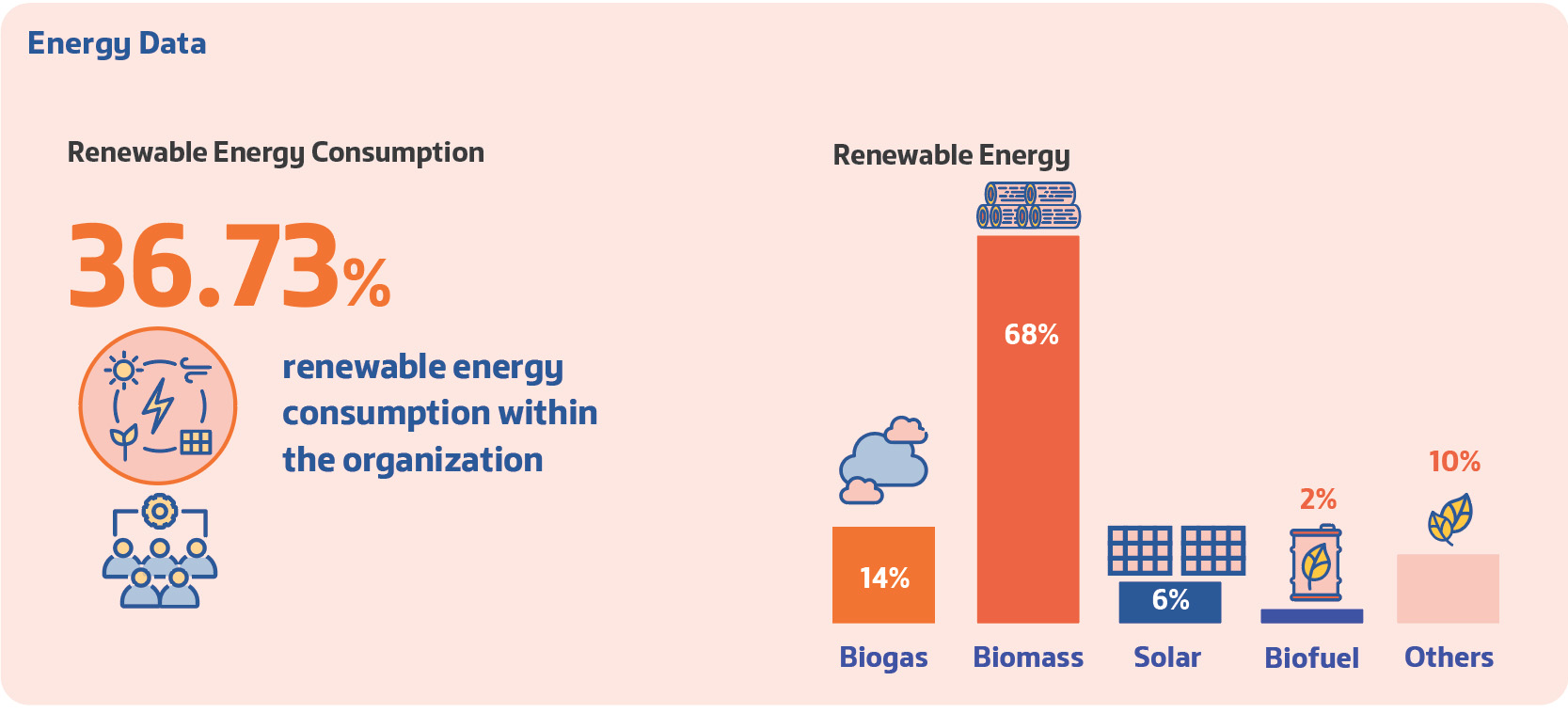
    Solar panels, biogas, and biomass projects significantly contribute to reducing reliance on fossil fuels and decreasing GHG emissions.
  • GHG Emissions Reduction Projects:
    These projects include installing LPG boiler to replace fossil fuel usage and installing an enclosed flare system to replace the open flare system to reduce methane leakage, one of the major greenhouse gases, thereby reducing GHG emissions by a substantial amount each year.
  • Energy Efficiency Projects:
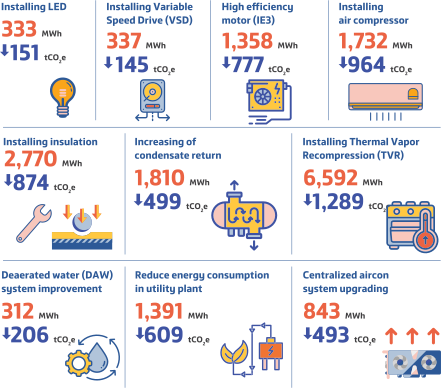
    Initiatives to decrease energy consumption include installing high-efficiency motor systems, increasing of condensate return, and air conditioning management.
Science Based Targets Initiative

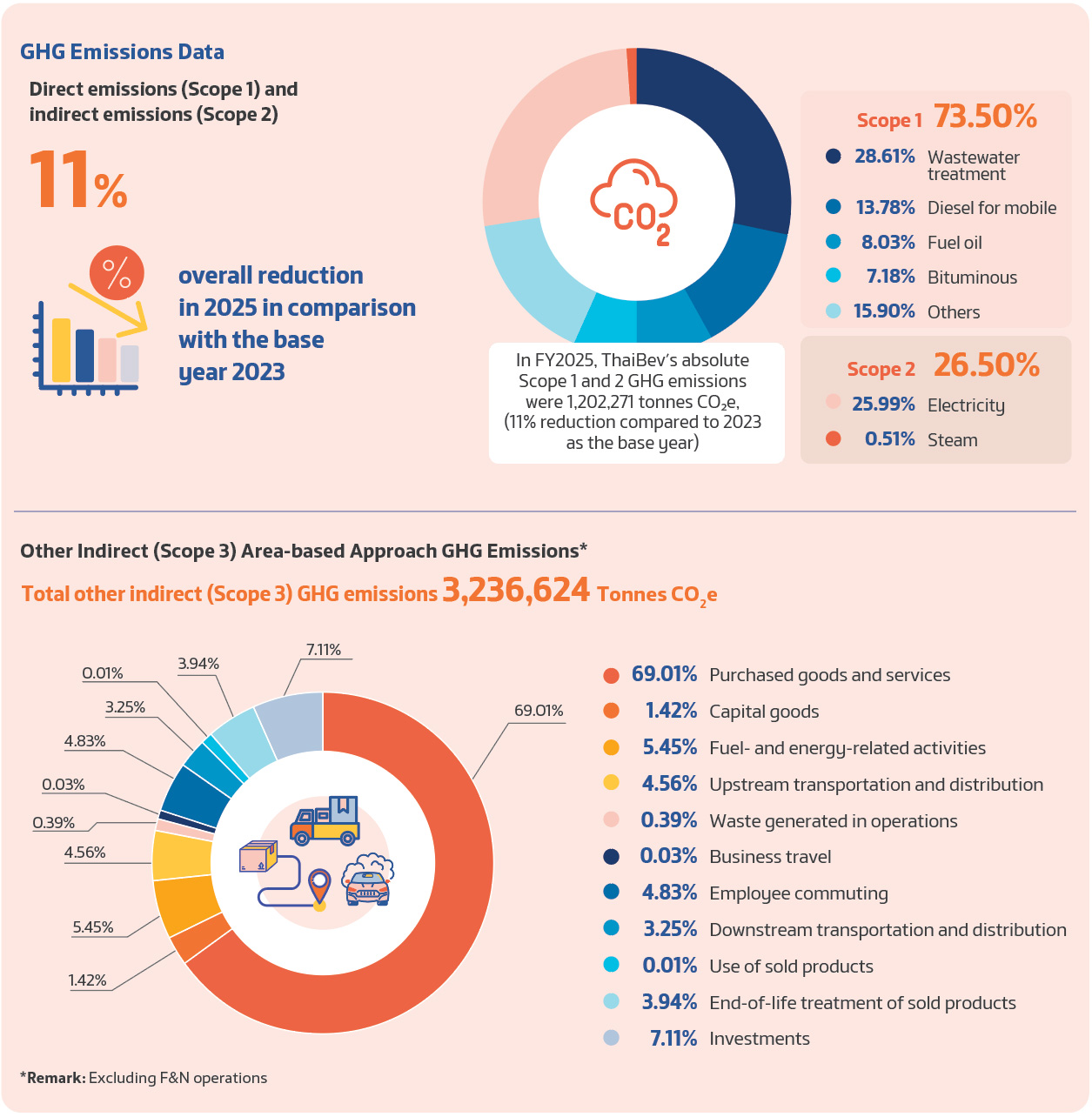
ThaiBev has been verified and declared a certified organization by the Science Based Targets initiative (SBTi), resulting from its short-term GHG emissions reduction target for 2030 and its long-term Net-Zero GHG emissions target for 2050. The first target is to reduce total GHG emissions by 42 percent by 2030, covering both direct emissions (Scope 1) and indirect emissions from energy use (Scope 2). Additionally, the company aims to achieve a 25 percent reduction in indirect GHG emissions across its entire value chain (Scope 3). By 2050, ThaiBev is targeting Net-Zero GHG emissions for Scope 1, 2, and 3. We aim to achieve our emissions reduction targets by collaborating with our suppliers and partners, working closely to implement new technologies and practices and collectively reduce emissions. Through these partnerships, we ensure that GHG emissions reduction is integrated throughout the value chain. For any residual emissions that cannot be eliminated, ThaiBev will deploy permanent carbon removal solutions. These may include carbon capture and storage (CCS) for relevant industrial processes and verified nature-based solutions, such as reforestation and afforestation, ensuring permanence, additionality, and rigorous monitoring and verification by international standards.
Remark: Excluding F&N operations and new acquisitions made in FY2025. ThaiBev will assess baselines and review targets to include F&N and new acquisitions in fiscal year 2026.

2030 Targets

42%
reduction of GHG emissions for Scope 1 and 2 compared to 2023 base year

25%
reduction of GHG emissions for Scope 3 compared to 2023 base year

50%
renewable energy by 2030
2050 Targets


Our environmental performance data undergoes annual third-party assurance as part of our sustainability reporting process. For further details, please see the International Financial Reporting Standards (IFRS) S2.
Key Projects

Renewable Energy Projects
Renewable energy projects contribute significantly to global efforts to reduce reliance on fossil fuels, lower GHG emissions, and support a more sustainable energy future. These projects are important for achieving renewable energy goals, protecting the environment, and encouraging innovation in cleaner and more efficient energy solutions.
Solar Energy Project
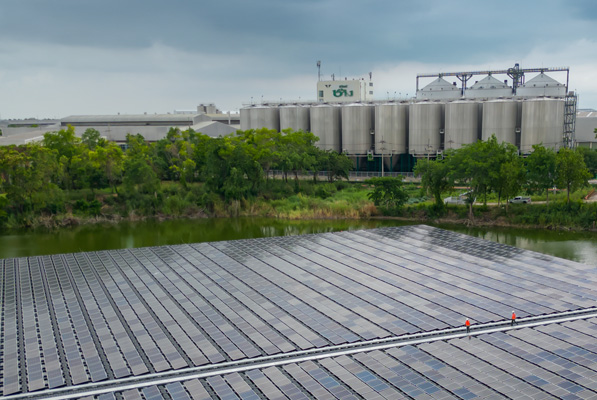
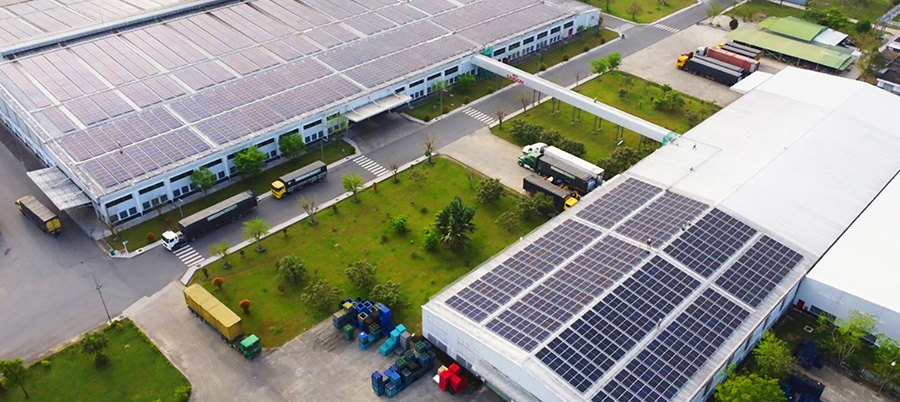
The solar energy project covers the installation of solar rooftops and floating solar panels in Thailand, Myanmar, Vietnam, Singapore, and Malaysia. The installation has been completed with a total capacity of 87.51 MWp (Megawatt peak). In FY2025, the installed solar panels can generate 83,519 Megawatt hours (MWh), which reduces the cost of electricity purchased from the grid by 301.68 million Baht and lowered GHG emissions by 41,178 tonnes CO2e.
Biogas Plants
ThaiBev constructed additional biogas plants and commenced operations in 2025 at three distilleries: Thanapakdi in Chiang Mai Province, Mongkolsamai in Uttaradit Province, and Luckchai in Ratchaburi Province, with a total investment of 418.27 million Baht. The project is expected to reduce heavy fuel oil consumption for steam production by approximately 1.7 million liters per year, equivalent to 19.8 million Baht per year, and lower GHG emissions by around 3,313 tonnes CO2e.

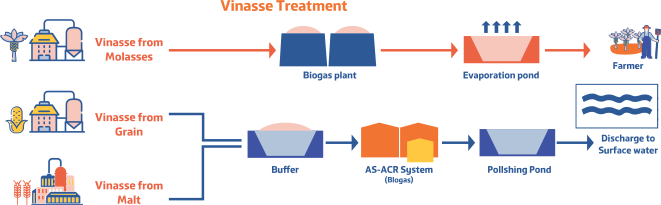
At present, ThaiBev operates 13 biogas plants at its distilleries, which utilize by-products from alcohol distillation, and an additional three biogas plants at breweries that produce steam from methane gas captured from wastewater treatment systems. Altogether, these biogas facilities help reduce dependence on fossil fuels, resulting in an estimated GHG emission reduction of 47,498 tonnes CO2e per year and annual energy cost savings of approximately 283.82 million Baht
Biomass Plants
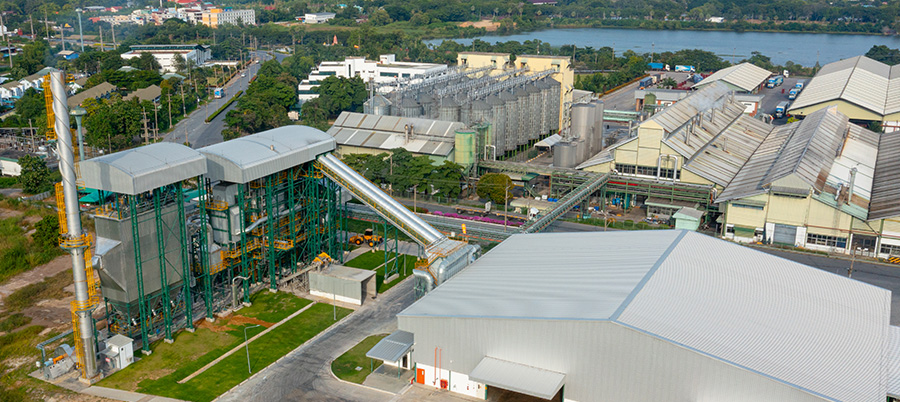
ThaiBev currently has two biomass boiler plants in Thailand and Myanmar. The boilers use organic materials such as wood chips, wood pellets, rice husks, and palm shells. The biomass boiler in Thailand is also designed to be able to use waste labels, sludge from wastewater treatment, and tea-leaf residue for steam generation to replace fossil-fuel energy. These biomass boilers produce 1,016,650,800 megajoules (MJ) of thermal energy, leading to a reduction in heavy oil and coal consumption for steam production by 1.10 million liters and 37.67 million kilograms, with a GHG emissions reduction of 95,276 tonnes CO2e per year. In addition, this biomass can reduce waste to landfills.

GHG Emissions Reduction Projects
CO2 Recovery
All ThaiBev’s breweries in Thailand, Vietnam, and Myanmar have adopted carbon dioxide (CO2) recovery practices in their operations. This system, which improves operational efficiency, captures CO2 generated during the fermentation of alcoholic beverages, and reuses it in the brewing process and for carbonating drinks, such as soda and beer. These projects reduce energy costs by 279.42 million Baht annually and lowered GHG emissions by 46,569 tonnes CO2e in FY2025.
Enclosed Flare
ThaiBev has upgraded our flare system from an open flare to an enclosed flare with an investment of 24.35 million Baht. This improvement significantly reduces methane leakage, one of the potent greenhouse gases, resulting in a reduction of GHG emissions by approximately 76,265 tonnes CO2 in 2025.
Electric Forklifts
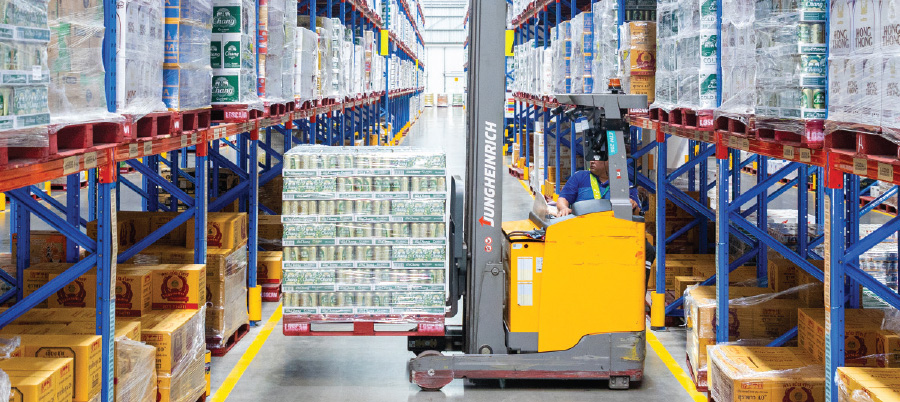
ThaiBev has introduced electric forklifts to replace diesel and LPG-powered forklifts for product handling within and around its warehouses. These electric forklifts help reduce fuel and LPG consumption by approximately 5,700 liters and 134,632 kilograms per year, and lower greenhouse gas (GHG) emissions by around 446 tonnes CO2e.
One Logistics
The One Logistics Project is a strategic initiative by ThaiBev aimed at enhancing efficiency and competitiveness in logistics. This project is the result of collaborative integration of supply chain and logistics activities, including planning, order management, warehousing, and transportation. The initiative is guided by principles of integration, optimization, and digitalization, with the objectives of improving operational efficiency, reducing logistics costs, and strengthening competitive capabilities. Key performance indicators include cost optimization and service level improvement through the maximization of resource utilization. Under the pilot Single-Roof Warehouse initiative for the One Logistics in 2025, 10 percent of workforce was reassigned to optimize productivity as well as warehouse space by 21 percent and emissions by 6,000 kg CO2e through reduced vehicle usage. The project involves close collaboration among ThaiBev’s internal logistics units, such as Thai Beverage Logistics, Sermsuk Logistics, HAVI, Cash Van Management, F&N Logistics, and the sales team. Currently, the integrated operational centers include warehouses in Hat Yai, Songkhla Province, and Prachinburi operating under a “single-roof warehouse” concept, with plans to expand to over 20 warehouses nationwide by 2030.
Low-Carbon Products

14
Products with Carbon Footprint Reduction (CFR) certification

49
Products with Carbon Footprint Product (CFP) certification
Remark: Only applicable to products marketed in Thailand

Energy Efficiency Projects
Air Conditioning Management
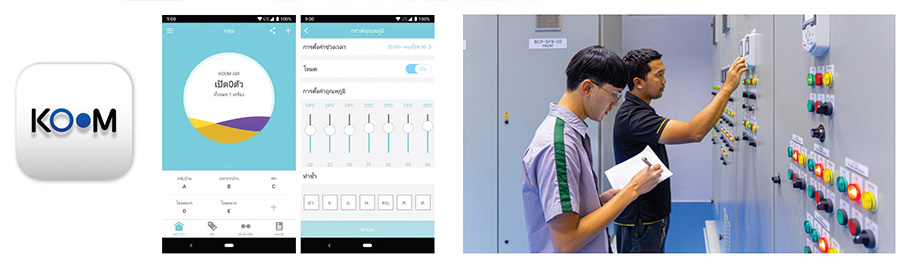
In FY2025, ThaiBev’s Food Business launched an Air Conditioning Management project to optimize air conditioning use in its restaurants. The project utilizes automated programs and devices controllable via smartphone, making it easier to monitor and manage air conditioning systems across the organization. This initiative is expected to reduce electricity consumption by 62,050 kWh, lower GHG emissions by approximately 26 tonnes CO2e, and achieve annual energy cost savings of around 310,250 Baht, all without compromising users’ comfort. Currently, the system has been implemented in 3 branches, with plans to expand to an additional 20 branches in FY2026.
Energy Efficiency Training
To drive the successful implementation of energy efficiency measures and new technologies, ThaiBev organizes training programs led by industry experts to enhance employees’ knowledge and engagement in energy conservation. These programs aim to instill an energy- conscious mindset and promote the efficient and sustainable use of energy across all operations. Training topics include energy management, performance assessment of key equipment such as air compressors and steam generators, as well as proper maintenance of air-conditioning systems and the selection of energy- efficient electrical appliances for factory operation.
Energy-saving Projects
To reach maximum energy efficiency, ThaiBev continually invests in innovative projects and the development of new technologies. Examples of initiatives are provided below.


Stakeholder Engagement Projects
Supplier Climate Program
ThaiBev collaborates with strategic business partners to strengthen supplier development through the Thailand Supply Chain Network (TSCN). The company invites suppliers to participate in training and seminars by the Thailand Sustainability Academy (TSA) to deepen their knowledge of sustainable practices and low-carbon transitions. In 2025, ThaiBev held “Greenhouse Gas Accounting” training sessions focused on Scope 1 and Scope 2 emissions, led by environmental and sustainability experts, with more than 64 participants from various supplier companies. These sessions aim to build suppliers’ capabilities in GHG accounting and emissions reduction.

TSA has also supported the Supplier Development Program in 2025 by creating a centralized training platform for TSCN members to better understand decarbonization strategies and apply them within their operations. The program, designed to make the transition to carbon neutrality and Net-Zero more practical, will be delivered by trainers who completed TSA’s Train the Trainer courses in 2024 and 2025. The plan includes six training batches, targeting more than 400 participating suppliers in 2025.
Community Forest Project with the Mae Fah Luang Foundation
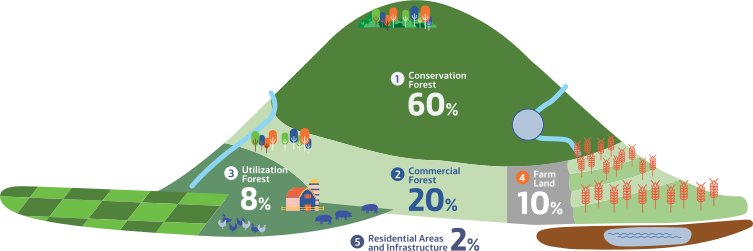
ThaiBev has partnered with the Mae Fah Luang Foundation under Royal Patronage to launch the Community Forest Restoration Project in Thailand. The initiative aims to empower local communities to conserve and restore community forests, thereby enhancing their role in carbon sequestration through a carbon credit management mechanism. This collaborative effort serves as an important approach to promote forest conservation, strengthen community resilience, and deliver positive environmental and social impacts. Commencing in 2021, the collaboration has been progressively expanded and currently covers more than 66,254 rai across 12 provinces. The project integrates natural resource conservation with community development, contributing to reducing Thailand’s greenhouse gas emissions and supporting the country’s sustainable development agenda. In 2025, ThaiBev received 29,219 tCO2e in carbon credits from the project’s first phase. The credits were certified under the Thailand Voluntary Emission Reduction Program (T-VER) for the forestry sector. The achievement reflects ThaiBev’s strong commitment to integrating environmental conservation into its business operations and mitigating the impacts of climate change. The company plans to utilize the carbon credits obtained to offset greenhouse gas emissions from its production processes and related activities, supporting progress toward its Net-Zero greenhouse gas emissions target across Scopes 1, 2, and 3.

Achievements
ASEAN Energy Awards 2025
The 25th ASEAN Energy Business Forum held an awards night to announce the winners of the ASEAN Energy Awards 2025 on Thursday, 16 October, in Kuala Lumpur, Malaysia. The event was organized by the ASEAN Centre for Energy and hosted by the Ministry of Energy Transition and Water Transformation (PETRA), Malaysia. The ASEAN Energy Awards stand as an esteemed honor, celebrating excellent contributions to the energy sector across the region and encouraging greater private-sector participation in ASEAN energy development.

In 2025, ThaiBev received the following awards, underscoring our commitment to efficient energy management throughout our entire value chain:
  • 2nd Runner Up – ASEAN Renewable Energy Project Awards, Biofuel category, for Renewable energy production project from slop wastewater, by Thai Beverage Energy Company (Pathum Thani Province)
Moving Forward
To achieve our short-term targets of a 42 percent reduction in GHG emissions for Scope 1 and 2 and 25 percent reduction for Scope 3 by 2030 (compared to 2023 as the base year), we are putting in place the following initiatives.
Solar Energy Projects
In 2026, ThaiBev plans to install solar power systems across Thailand and Vietnam with a targeted total capacity of 12.84 MWp. This initiative represents a total investment of approximately 165.62 million Baht and aims to expand the company’s renewable energy portfolio and support the achievement of its long-term targets.
Biomass Plant
ThaiBev is expanding its biomass plant in Thailand at the Beer Thai Brewery in Kamphaeng Phet Province, with completion expected by 2026 and a total investment of 55 million Baht. This project aims to reduce coal consumption for steam production by approximately 80 percent, resulting in a reduction of 31,589 tonnes CO2e per year.
Biogas Plants
ThaiBev has enhanced the biogas plant at the Red Bull Distillery in Samut Sakhon Province to increase its biogas generation capacity for steam production. The project, with a total investment of 277.51 million Baht, is scheduled for completion in 2026. This project is designed to reduce heavy fuel oil consumption for steam production by approximately 3.50 million liters per year and decrease greenhouse gas emissions by an estimated 78,735 tonnes CO2e by 2026/2027.
Bioenergy Boiler Plant
ThaiBev’s distillery in Myanmar have invested 267.73 million Baht in installing a 35 tonne biomass boiler and a 1,400 kW steam turbine that together generate 2,923,200 kWh of electricity using rice husks as fuel. The project includes in-house rice husk pellet production to ensure a steady supply, and can also utilize biogas from the wastewater treatment process. This project is expected to be completed in 2026, reduce diesel consumption by approximately 0.4 million liters per year, reduce coal consumption by approximately 20 million kilograms per year, GHG emissions by around 50,246 tonnes CO2e per year, and achieve annual cost savings of 75 million Baht.
Biocarbon Plant
In 2025, ThaiBev has started to install a biocarbon plant in Thailand at its United Winery Distillery in Nakhon Pathom Province. This plant uses torrefied biocarbon powder as input for steam generation, replacing fossil fuel energy through investment of 56 million Baht. The biocarbon plant will reduce fuel oil consumption by 2.1 million liters annually, resulting in cost savings of 38.64 million Baht per year. Furthermore, the project will achieve an annual reduction in GHG emissions of 6,495 tonnes CO2e.

This innovative system features pulverized solid fuel machinery designed to meet advanced engineering standards. It incorporates a parameter detection system and automated boiler operations controlled by a Programmable Logic Controller (PLC), ensuring ease of operation and efficiency.
Liquefied Petroleum Gas (LPG) Boilers
ThaiBev invested approximately 9 million Baht in the installation of a Liquefied Petroleum Gas (LPG) boiler at a non-alcoholic beverage production facility in Nakhon Ratchasima Province in Thailand. The new boiler utilizes LPG in place of fuel oil for steam generation, producing a total of 12,000,000 megajoules (MJ) of thermal energy. This transition is expected to reduce fuel oil consumption by 266,498 liters per year, lower greenhouse gas (GHG) emissions by 408 tonnes CO2e, and achieve an estimated annual energy cost saving of approximately 1.71 million Baht.
Supplier Engagement for Indirect GHG Emissions Reduction
As part of our Scope 3 GHG Emissions Reduction Plan, ThaiBev will prioritize supplier development and engagement as key enablers toward achieving Net-Zero. The initiative focuses on strengthening the capabilities of suppliers to calculate and manage their GHG emissions, encouraging them to establish reduction targets aligned with ThaiBev’s sustainability direction, and enhancing carbon footprint traceability across key commodities such as packaging materials and agricultural products. ThaiBev will also collaborate closely with strategic suppliers to share knowledge, tools, and best practices for low-carbon production and supply chain management. In addition, the company will integrate climate-related criteria into supplier assessments and procurement processes to promote transparency, resilience, and sustainable growth throughout ThaiBev Group’s value chain.

Read More Information about
Climate Change and Energy Management
in Sustainability Report 2025