ThaiBev’s Sustainability 2025
Home / Environmental
Packaging Management
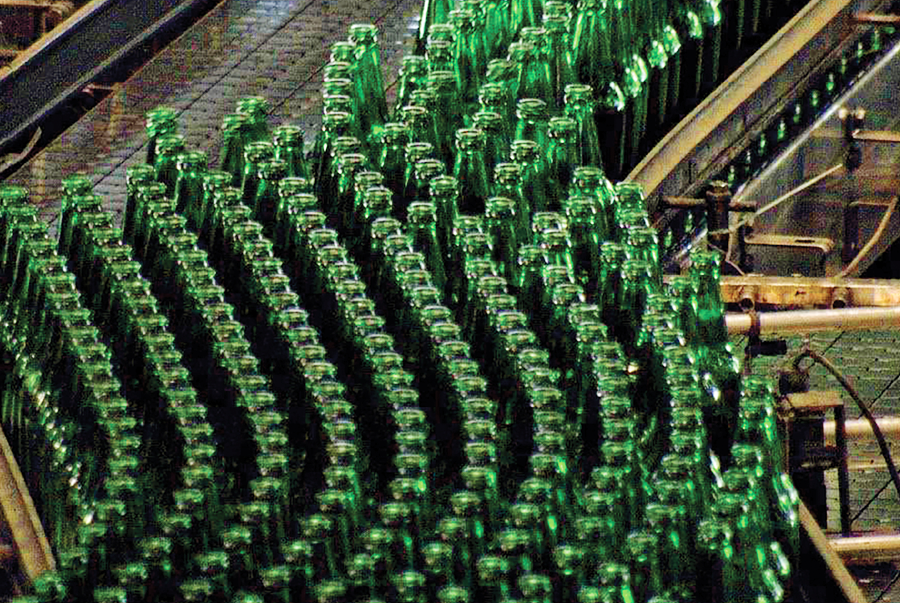
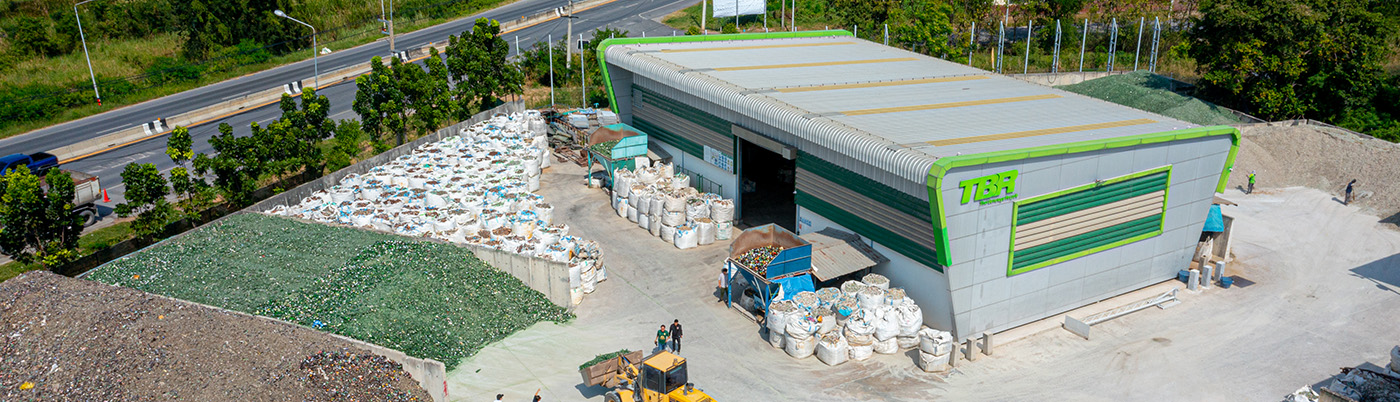
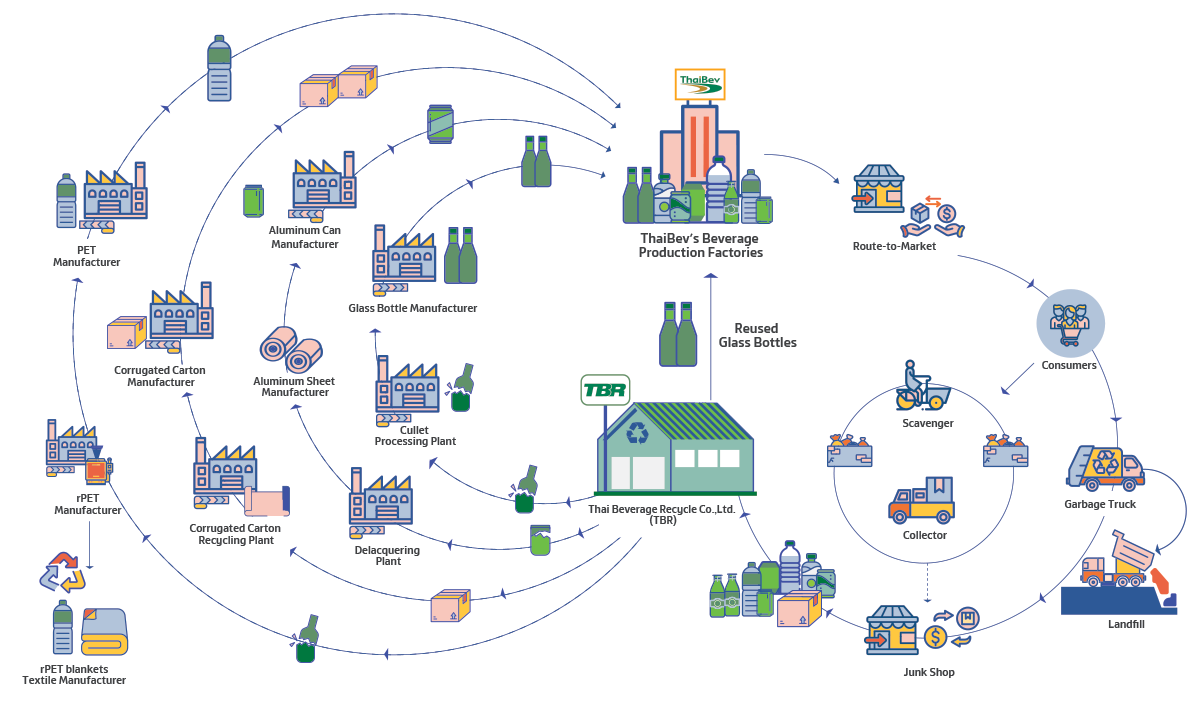
Packaging materials play a vital role in ensuring product quality, meeting regulatory and consumer expectations, and supporting sustainability performance. Guided by circular economy principles, ThaiBev has established a packaging collection system that promotes reuse and recycling opportunities after consumption, particularly for primary materials such as glass, paper, aluminum, and PET. For glass bottles, beyond collection and sorting, the materials undergo further processing through crushing to comply with the specifications required by glass manufacturers. These efforts are managed by Thai Beverage Recycle (TBR), a dedicated ThaiBev subsidiary, overseeing the management of post-consumption packaging to ensure efficient and responsible recovery processes.

ThaiBev continuously assesses environmental and social impacts associated with packaging across its entire life cycle from design and production to consumption and end-of-life management. The company remains committed to optimizing resource efficiency and minimizing greenhouse gas (GHG) emissions. To achieve these goals, ThaiBev collaborates closely with a broad range of stakeholders, including Tier 1 and non-Tier 1 suppliers, small business partners, and consumers, fostering shared responsibility throughout the value chain.

Demonstrating strong organizational commitment, ThaiBev has set measurable, time-bound targets to reduce packaging volume and weight. The company has initiated multiple programs to increase the use of reusable and recyclable packaging, phase out single-use plastics, expand incorporation of recycled materials, and ensure that all recyclable packaging is effectively recycled. Furthermore, ThaiBev continues to invest in research and development to advance sustainable packaging innovations and explore alternative materials that balance functionality, quality, and environmental stewardship.
Management Approach
ThaiBev aims to achieve packaging circularity, taking into account all environmental as well as social impacts. The company integrates the circular economy concept into its entire packaging value chain, from design stage to post-consumption packaging management. The key elements of ThaiBev’s management approach towards packaging circularity are:
  • Optimization of Packaging Weight and Volume
    ThaiBev collaborates closely with suppliers to design and develop packaging that minimizes the use of natural resources while maintaining product quality and functionality. In Thailand, ThaiBev has successfully downgauged aluminum cans, reducing aluminum consumption by 2,640 tonnes compared to 2020. By 2030, the company aims to further reduce raw material use in aluminum can production by 2,700 tonnes compared to the 2020 baseline. Additional packaging reduction initiatives in ThaiBev Group include reducing the weight of glass bottles: reducing PET bottle weight; minimizing the thickness of LDPE plastic film; adopting lightweight Narrow Neck Press & Blow (NNPB) glass bottles; and introducing Green Partitions that use less paper and enable simplified assembly.
  • Post-consumption Packaging Collection and Sorting
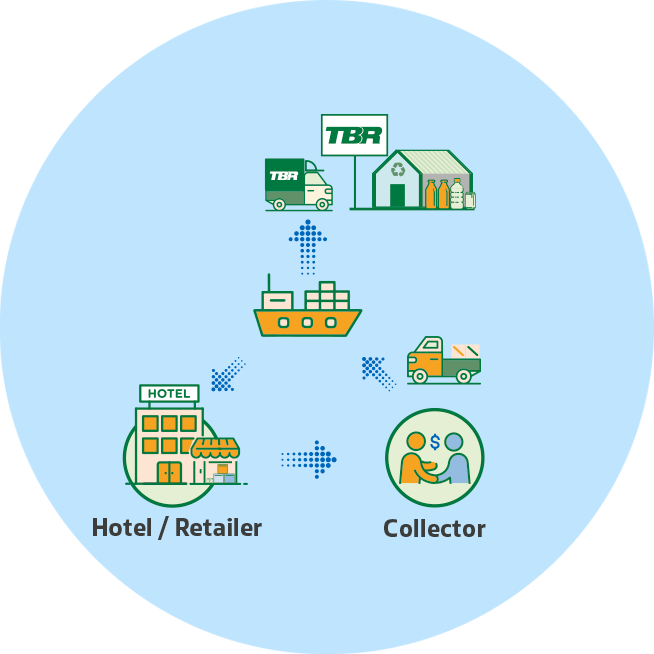
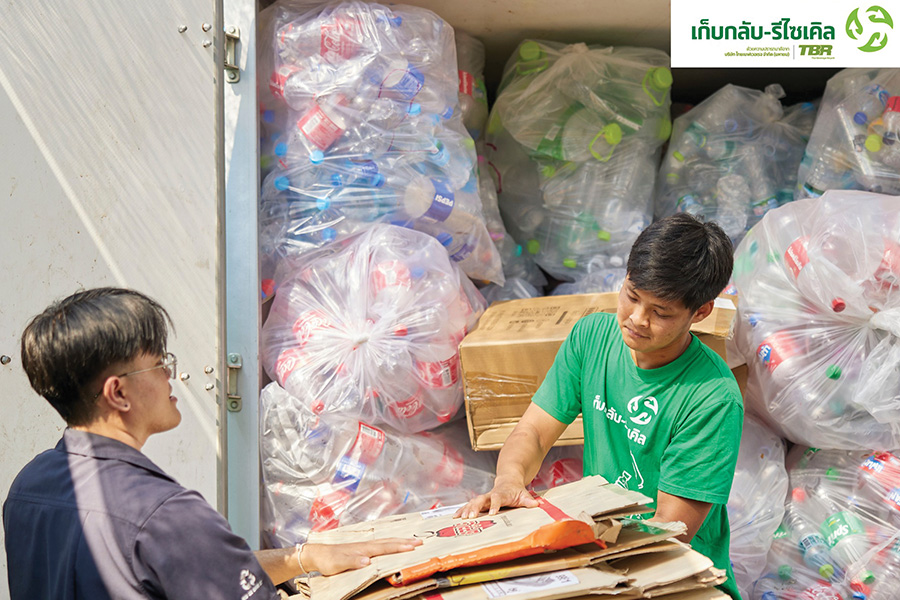
    Thai Beverage Recycle (TBR) manages the collection of ThaiBev’s post-consumption packaging from business partners across Thailand and collaborates with various organizations to support waste management and packaging recovery. These partners include schools, universities, and office buildings. At company-owned facilities, TBR sorts key packaging materials such as glass bottles, aluminum cans, PET bottles, and corrugated cartons to ensure efficient recycling and material recovery.
  • Reuse and Recycle
    TBR works with partners across the packaging value chain, including local collectors and recyclers, to establish and strengthen post-consumption collection systems. Both ThaiBev and SABECO have implemented returnable packaging systems, promoting material reuse, waste reduction, and resource efficiency.
  • Innovation and Product Design for Sustainable Packaging
    ThaiBev established BevTech Co., Ltd. in 2018 as its research and development center to advance innovation in sustainable packaging, machinery, and automation. BevTech develops technologies such as AI-driven bottle-sorting systems that identify and separate reusable glass bottles from defective ones. To enhance used packaging collection, ThaiBev has also introduced a loyalty program for used glass bottle suppliers, integrating a points-based incentive system modeled after its existing sales agent program. This tool helps identify areas with lower collection-to-sales ratios and expand networks of potential collectors, thereby improving collection efficiency and cost optimization.
  • Stakeholder Collaboration
    ThaiBev advances packaging circularity through cross-sector collaboration at both the national and regional levels. As a leading partner of the Thailand Institute of Packaging and Recycling Management for a Sustainable Environment (TIPMSE) under the Federation of Thai Industries (FTI), ThaiBev plays an active role in shaping Thailand’s packaging circularity roadmap and supporting the development of EPR regulations and national recycling infrastructure. Through the Thailand Supply Chain Network (TSCN), ThaiBev extends collaboration with suppliers and industry peers to embed sustainability standards and shared learning across the value chain. At the consumer level, the Bring Back–Recycle program promotes awareness and participation in post-consumption packaging recovery, transforming waste management into community-driven circular value creation.
ThaiBev's Packaging Value Chain
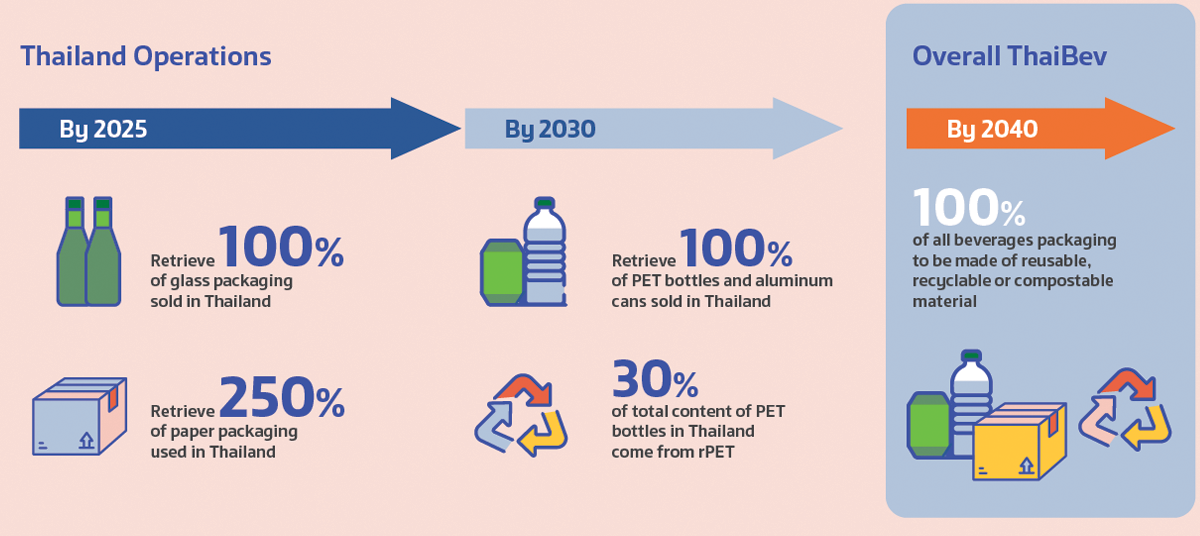
Targets

Key Projects

Sustainable Packaging Design

ThaiBev has implemented a wide range of sustainable packaging initiatives to reduce environmental impacts and promote circular economy principles across its packaging portfolio. For glass packaging, the company has introduced lightweight bottles using the Narrow Neck Press & Blow (NNPB) process, reducing material use while maintaining product quality. In aluminum packaging, ThaiBev has reduced the gauge of aluminum cans and lids to enhance recyclability and lower material consumption, and also implemented a recyclable aluminum bottle with a screw cap containing nearly 80 percent recycled content for Chang Unpasteurized Beer. Paper-based packaging efforts include optimizing corrugated cartons and inserts, introducing reusable inserts, replacing Masonite sheets with Corrugated Fiber Board in selected SKUs, and minimizing the thickness and dimensions of paper to reduce non-recyclable waste. For plastic packaging, ThaiBev has introduced 100 percent recycled PET (rPET) bottles for est Cola 515 ml and Borneo Spring. The company has also redesigned plastic bowls, trays, and other food-delivery packaging to use less material while maintaining product quality.

To improve recyclability and reduce non-recyclable plastics, ThaiBev has transitioned from PVC to PET for cap seals and labels and implemented innovative designs such as perforated shrink sleeves, tethered caps for Oishi Green Tea and Crystal Drinking Water, and mono-layer packaging for Oishi Eato meals. Collectively, these initiatives demonstrate ThaiBev’s commitment to resource efficiency, circularity, and sustainable packaging management across its diverse product portfolio.

ThaiBev Packaging Recyclability Assessment

In 2025, ThaiBev conducted a comprehensive group-wide assessment of packaging recyclability to enhance compliance readiness and inform long-term strategic decision-making. With Extended Producer Responsibility (EPR) regulations expanding across key markets, this assessment establishes a strategic baseline for how ThaiBev will manage packaging within a circular economy framework and in alignment with the company’s Net-Zero transition.
The assessment evaluated all packaging against four key criteria:

Collection infrastructure and EPR compliance

Material and eco-design standards

Recycling infrastructure availability

Market value of recycled materials
By mapping recyclability performance across its portfolio, ThaiBev is able to identify priority areas for redesign, integrate recyclability criteria into packaging development, and allocate resources toward innovative materials, circular design, and take-back systems. This proactive approach positions ThaiBev to anticipate and adapt to evolving regulatory requirements, reduce packaging-related greenhouse gas emissions, and accelerate progress towards our Net-Zero ambition.

Each packaging category is defined as follows:

Poor Recyclability:
Requires redesign and immediate improvement.
Moderate Recyclability:
Needs significant enhancement to meet recyclability standards.
Excellent Recyclability:
Meets or exceeds recyclability standards and is prioritized for broader application in sustainable packaging.

Extended Producer Responsibility across Markets
ThaiBev recognizes the importance of Extended Producer Responsibility (EPR) as a key mechanism to advance circular economy practices and promote responsible packaging management across our value chain. Under the EPR concept, producers are accountable for the environmental impacts of their products and packaging throughout the entire life cycle from design to post- consumption management. ThaiBev prioritizes EPR as a strategic approach to enhance packaging circularity, ensure regulatory readiness, and foster collaboration with relevant stakeholders in all operating markets.

ThaiBev’s subsidiary in Vietnam, SABECO, complies with Vietnam’s EPR regulation by authorizing PRO Vietnam, a non-profit organization, to manage the collection and recycling of post-consumer packaging. In 2025, PRO Vietnam facilitated the recycling of approximately 275 tonnes of aluminum and 1,313 tonnes of carton packaging on behalf of SABECO. In addition, SABECO engaged Ngoc Diep, a certified recycler, to directly collect and recycle 269 tonnes of post-consumer aluminum cans during the year. These initiatives demonstrate SABECO’s commitment to fulfilling regulatory obligations while contributing to Vietnam’s national recycling targets.

Since 2019, F&N, a ThaiBev subsidiary in Singapore, has partnered with the National Environment Agency (NEA) to deploy 50 Reverse Vending Machines (RVMs) across the country. The initiative offers convenient drop-off points for recycling selected plastic bottles and aluminum cans, encouraging long-term recycling habits among consumers.

ThaiBev’s subsidiary in Scotland, Inver House, has undertaken a Sustainable Packaging Solutions Project in collaboration with a third-party consultant to enhance packaging sustainability and reduce environmental impacts associated with packaging waste. The project evaluated compliance costs and risks under the United Kingdom’s EPR framework and identified opportunities to improve material efficiency, recyclability, and circular design.

ThaiBev’s operations in Thailand have actively collaborated with the Thailand Institute of Packaging and Recycling Management for a Sustainable Environment (TIPMSE) under the Federation of Thai Industries (FTI) in the development of the Extended Producer Responsibility (EPR) scheme in Thailand. Under the EPR concept, producers are responsible for the environmental impacts of their products and packaging throughout their entire life cycle, including the post-consumption stage.

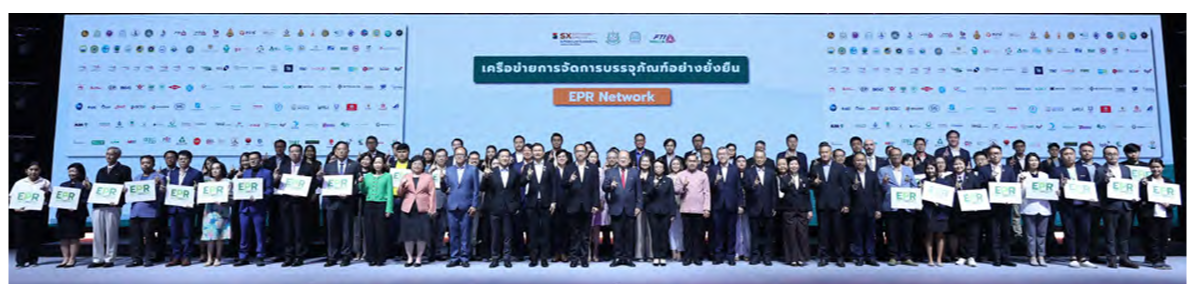
In 2025, TIPMSE mobilized more than 149 partner organizations to drive the “EPR in Action” initiative under the concept of transforming post-consumption packaging into valuable raw materials in accordance with circular economy principles. The initiative promotes incentive mechanisms through tax benefits, market-based instruments, and the adoption of Design for Recycle (D4R) and Post-Consumer Recycled (PCR) materials to reduce environmental impacts. This collective effort was showcased at the Sustainability Expo (SX2025), reflecting Thailand’s growing momentum in advancing EPR implementation.

Accelerating EPR & Climate Action for Sustainable packaging management

ThaiBev is participating in a landmark MOU signed by 16 organizations, including government agencies, private sector companies, NGOs and academic institutions, to advance sustainable beverage packaging management. The collaboration aims to study, develop, and implement comprehensive packaging management in line with circular economy principles, supporting greenhouse gas reduction across the industrial supply chain. The initiative adopts the “Aluminium Loop Model”, a transparent and verifiable closed-loop recycling framework, and collects industry data on aluminum packaging to align with Thailand’s carbon border adjustment measures (TH-CBAM), contributing to the country’s Net-Zero 2050 target.

Bring Back–Recycle

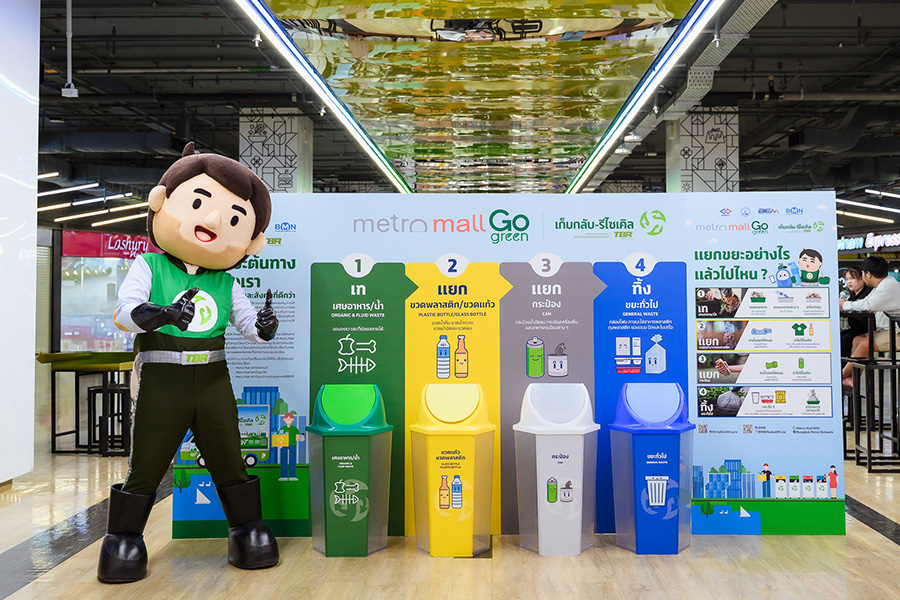
The Bring Back–Recycle project in Thailand, led by Thai Beverage Recycle Co., Ltd (TBR), aims to promote responsible post-consumption packaging management among consumers. The project has expanded its efforts to 37 office buildings across Bangkok. Over the past six years, the project has organized a wide range of waste separation initiatives in collaboration with various partners to improve waste management and packaging recovery at various major events such as MotoGP, King’s Cup, Buriram Marathon, We Can Run: Fund for Legs, UD Town Songkran Festival, Olympic Day Suphanburi 2025, Run for Mom 2025, KNT RUN, Med Music in the Park, Bangkok Bestival and Sustainability Expo 2025.

In 2025, TBR acted as a supporting partner for the FIVB Women’s World Championship 2025, which adopted the Green Heart Event Criteria (GHEC) standard. The project saw waste-sorting points set up at all four venues in Bangkok, Chiang Mai, Nakhon Ratchasima, and Phuket, successfully collecting 1,174 kilograms of recyclable materials, generating 22,883.9 Baht for donation to the Prostheses Foundation of Thailand.


In collaboration with Bangkok Metro Networks (BMN), a subsidiary of Bangkok Expressway and Metro Public Company Limited (BEM), under the METRO MALL GO GREEN initiative, the project supported lifestyle changes aligned with Zero Waste and Low Carbon Footprint concepts at six MRT stations, including Queen Sirikit National Convention Centre (QSNCC) Station, Sukhumvit Station, Phetchaburi Station, Phra Ram 9 Station, Phahon Yothin Station and Chatuchak Park Station.


TBR also continued the Sustainable Waste Management initiative with Sustainability Expo Co., Ltd. (SX) in collaboration with the Central Police Flat Community Committee (Chaloemlap) in Bangkok, which is aimed at becoming a model zero-landfill community. TBR partnered with the community to improve waste management systems. In the upcoming year, TBR will increase resident participation and expand segregation of additional waste types for income generation or proper management, ultimately reducing the amount of waste requiring disposal and aligning with Bangkok’s waste management goals.


TBR launched the “Recycle for Cash and Care” activity to promote waste management at large-scale events by using electric vehicles to collect materials from sorting points and vendor booths, allowing participants to either receive the proceeds or donate them to organizations or foundations.

In addition, Bring Back–Recycle joined as a partner organization with PPP Plastics network, Public Private Partnership for Sustainable Plastic and Waste Management. The initiative advances a Plastics Circularity Ecosystem and supports data systems for EPR. An MOU was also signed under the “This House Doesn’t Mix: Waste Sorting to Reduce Fees” project, through the OK Recycle platform, to connect waste-segregation data from the source and encourage households to sort waste by type, reducing disposal volumes and contributing to long-term social and environmental benefits.

The Island Model

The Island Model demonstrates how ThaiBev integrates packaging circularity with local community development in environmentally sensitive areas. Implemented in collaboration with local authorities, waste collectors, and scrap shops, the program addresses the unique challenges of managing post-consumption packaging in remote island destinations where limited transportation access, high logistics costs, and mixed waste disposal often make recycling unviable.

When the program was first introduced, most post-consumption packaging was disposed of together with general waste, providing no income opportunities for local communities. Through engagement and tailored support, ThaiBev worked with partners to establish systematic waste separation and collection processes. As a result, waste composition and quality have gradually improved, making recycling more feasible and providing new livelihood opportunities for residents.

In 2025, the program expanded to nine islands across eastern and southern Thailand. Tailored collection and transport systems enabled the recovery of post-consumption packaging, diverting waste from unmanaged disposal and marine leakage. These efforts helped prevent marine litter, protect fragile ecosystems thereby benefiting marine species, safeguard coastal biodiversity from the impacts of plastic and microplastic pollution and reduce packaging-related greenhouse gas emissions through the recycling process.

Beyond the direct operational benefits, the Island Model embodies a dual value creation approach:
  • External impact:
    Reduces marine pollution risk, enhances coastal ecosystem protection, and strengthens community resilience through stable income opportunities.
  • Internal impact:
    Improves regulatory readiness in high-tourism areas, mitigates reputational risks related to plastic leakage, and contributes measurably to Scope 3 emissions reduction.
As it encompasses both internal and external outcomes, ThaiBev uses the Island Model as a strategic decision- making tool to guide future investments in circular packaging systems. The model is now being scaled to additional islands, positioning it as a replicable framework that aligns business resilience with long-term positive impact for society and the environment.
To adapt to varying local conditions, ThaiBev has developed specialized collection models tailored to the specific needs of each island, resulting in the following approaches:

Samui Model:
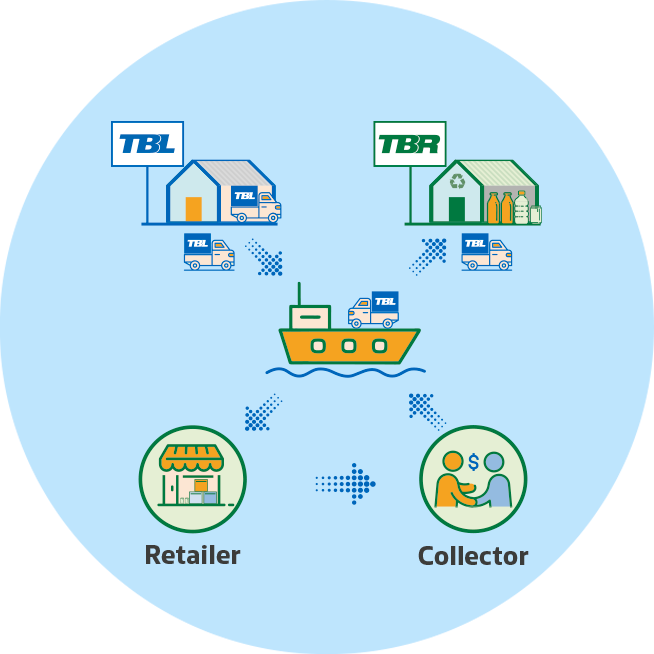
This model utilizes the backhaul logistics of Thai Beverage Logistics (TBL). On routes where trucks deliver products to the island they then bring the post-consumer packaging back on the return trip to increase transportation efficiency. This model is used for Samui Island, Tao Island, Phuket Island, and Phangan Island.

Sichang Model:
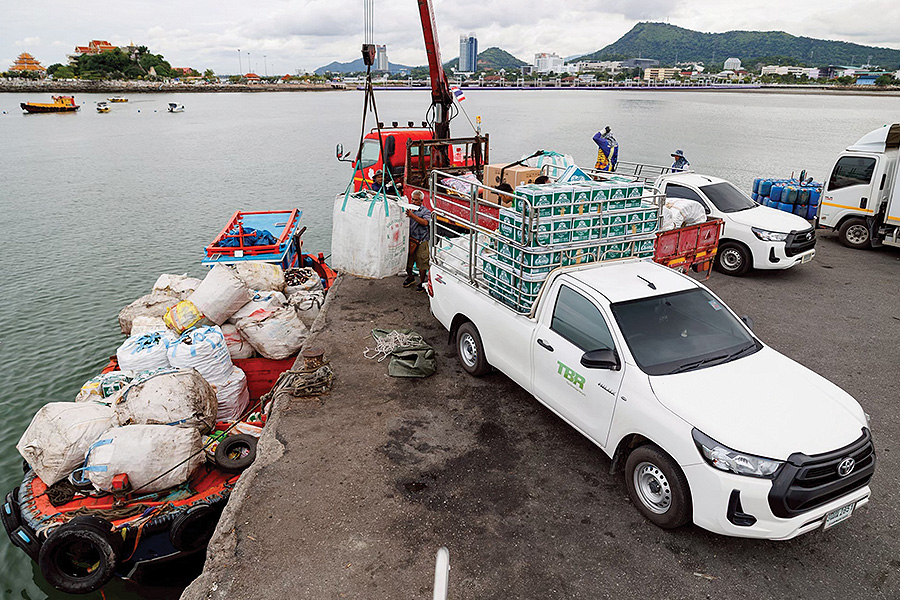
This model is suitable for islands that are not accessible by trucks, where the main mode of transportation is by boat. TBR directly collects post-consumption packaging at a pier on the mainland. This model is used in provinces where TBR buying points are available, such as Sichang Island, Lan Island, and Samet Island.

Chang Model:
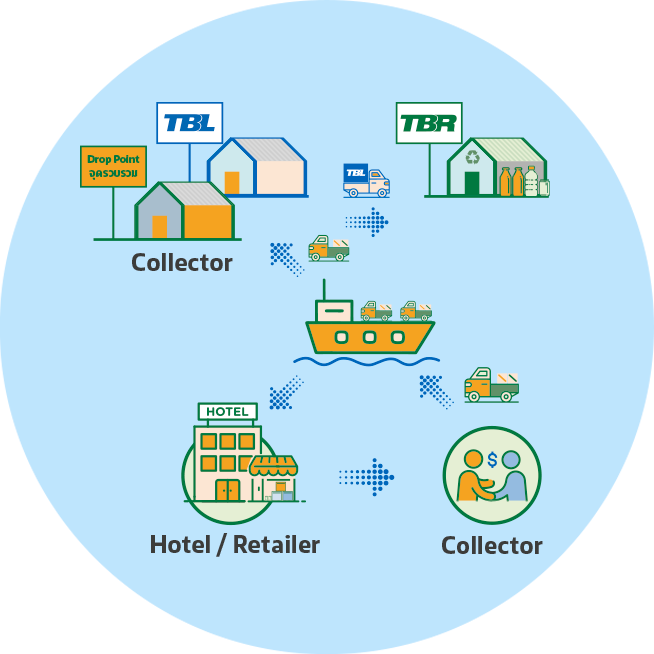
This model is implemented when collectors on the island can transport their post-consumption packaging directly to a collectors within TBR’s network or to a TBL warehouse in the province, instead of delivering it to TBR. This model helps reduce transportation distance and costs. This model is used for Chang Island and Lanta Island.
By tailoring these systems to island-specific conditions, ThaiBev has developed a scalable blueprint that combines environmental protection with community development. In 2025 alone, the program achieved 3,717 tonnes of packaging recovered, 16.46 million Baht in community income generated, and 3,321 tCO2e of emissions avoided through recycling, demonstrating its dual contribution to ThaiBev’s Net-Zero pathway and shared value creation for both society and the environment.
Achievements
Retrieval Rate in FY2025

Glass Bottle and Cullet representing
103%
of products sold in Thailand

Aluminum can representing
162%
of products sold in Thailand

Paper representing
264%
of paper packaging used in Thailand

PET representing
35%
of products sold in Thailand

Reduced raw materials in aluminum can production by
2,640 tonnes
compared to 2020 as the base year
Moving Forward
In the coming year, ThaiBev will continue to strengthen its packaging management by enhancing recyclability across the group’s portfolio. Key actions include conducting comprehensive packaging assessments to identify items with low recyclability, establishing clear design criteria for new product development, and expanding partnerships to improve collection systems in alignment with the forthcoming Extended Producer Responsibility (EPR) regulations.

Building on these efforts, ThaiBev will scale its “Island Model” approach, in which individual sites pilot innovative sustainability initiatives that are later integrated into a broader group-wide framework. This enables successful practices to be standardized, shared, and replicated across multiple operations.

In addition, ThaiBev will further implement take-back schemes for hard-to-recycle packaging, promote consumer awareness of responsible disposal, and explore closed-loop solutions that create value from recycled materials. Collectively, these initiatives aim to reduce environmental impacts, advance circular economy practices, and ensure long-term compliance with global sustainability standards.

Read More Information about
Packaging & Circular Economy
in Sustainability Report 2025