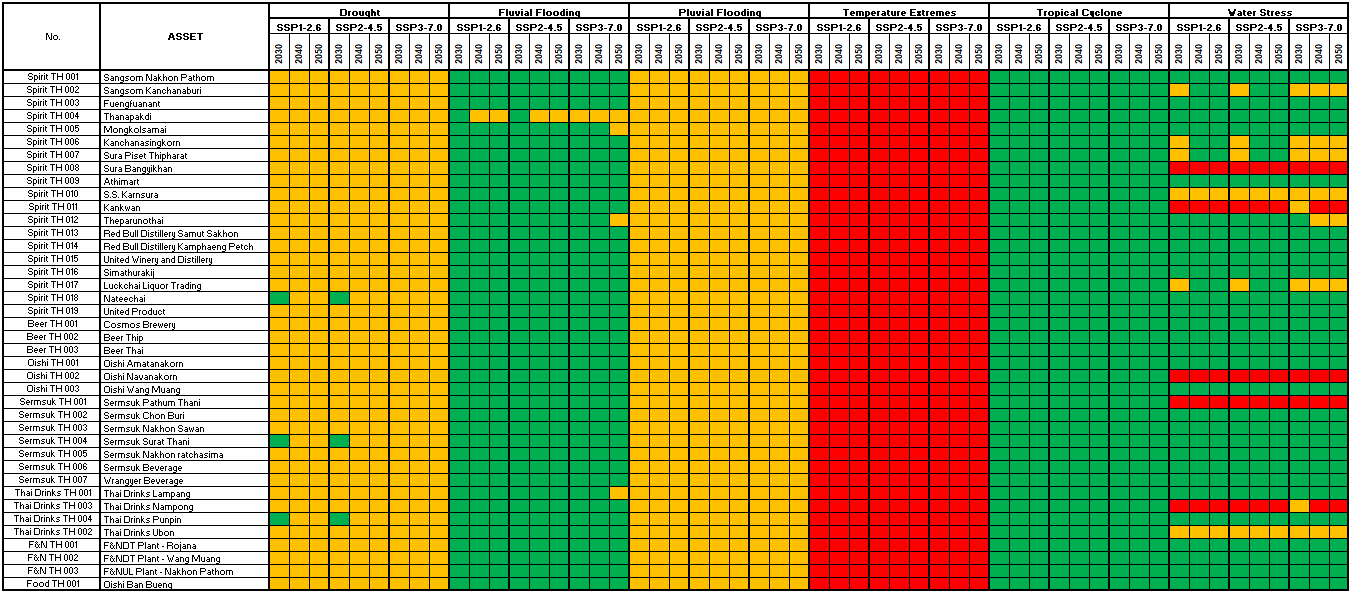
THAILAND LOCATION EXPORSURE SUMMARY
Thai Beverage assets in Thailand have high exposure to temperature extremes and generally medium exposure to drought and pluvial flooding across the assessed climate scenarios and time horizons. Water stress varies by location, ranging from low to high, with several sites showing consistently high exposure or increasing exposure over time. Exposure to fluvial flooding and tropical cyclones remains predominantly low.
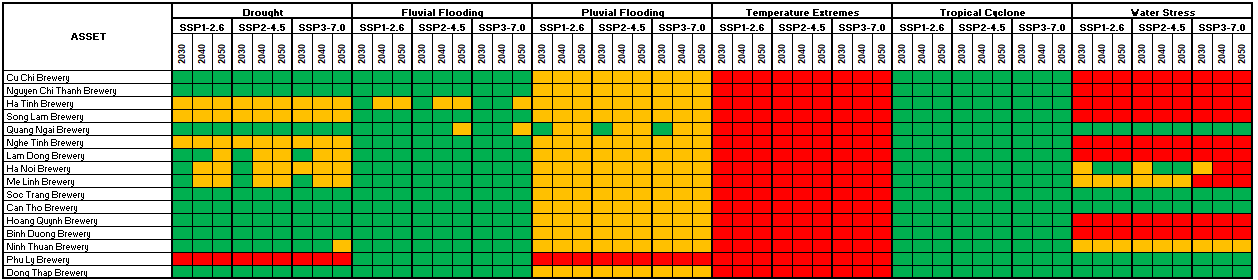
VIETNAM LOCATIONS EXPOSURE SUMMARY
Thai Beverage assets in Vietnam have high exposure to temperature extremes and generally medium exposure to pluvial flooding across the assessed climate scenarios and time horizons, with Phu Ly Brewery showing high exposure under most projections. Water stress varies significantly by location, ranging from low to high, with several breweries consistently showing high exposure. Drought exposure is generally low to medium, except at Phu Ly Brewery, where it remains high. Exposure to fluvial flooding is mostly low, with moderate exposure at selected sites, while tropical cyclone exposure remains low.
MALAYSIA LOCATION EXPORSURE SUMMARY
Thai Beverage assets in Malaysia have high exposure to temperature extremes and generally medium exposure to pluvial flooding across the assessed climate scenarios and time horizons, with exposure at selected sites increasing to high by 2050 under SSP3-7.0. Water stress varies by location, ranging from low to medium, and increases to high at several sites by 2050 under SSP3-7.0. Exposure to fluvial flooding, and tropical cyclones remains low, while drought exposure is generally low with moderate increases at selected sites.

SCOTLAND LOCATION EXPORSURE SUMMARY
Thai Beverage assets in Scotland have high exposure to temperature extremes across all assessed climate scenarios and time horizons. Exposure to pluvial flooding and drought is generally medium, although some assets show low exposure under certain scenarios and time horizons. Water stress remains low for most assets, with Airdrie showing medium exposure by 2040 & 2050 under SSP1-2.6 and SSP2-4.5. Exposure to fluvial flooding and tropical cyclones remains

MYANMAR LOCATION EXPORSURE SUMMARY
Thai Beverage assets in Myanmar have high exposure to temperature extremes and water stress across all assessed climate scenarios and time horizons. Pluvial flooding exposure is generally medium, although exposure at GRG Mandalay Bottling increases to high by 2050 under SSP3-7.0. Exposure to drought, fluvial flooding, and tropical cyclones remains

NEW ZEALAND LOCATION EXPORSURE SUMMARY
Thai Beverage asset in New Zealand has high exposure to temperature extremes and medium exposure to pluvial flooding across all assessed climate scenarios
and time horizons (2030, 2040, and 2050), while exposure to other hazards generally low.

FRANCE LOCATION EXPORSURE SUMMARY
Thai Beverage asset in France has high exposure to temperature extremes and water stress across all assessed climate scenarios and time horizons. Drought exposure is also generally high and is projected to intensify over time, while exposure to pluvial flooding varies from low to medium. Exposure to fluvial flooding and tropical cyclones remains low.

SINGAPORE LOCATION EXPORSURE SUMMARY
Thai Beverage asset in Singapore has high exposure to temperature extremes and medium exposure to pluvial flooding across all assessed climate scenarios and time horizons. Exposure to drought is projected to increase over time, while exposure to other hazards generally remains low.

CAMBODIA LOCATION EXPORSURE SUMMARY
Thai Beverage assets in in Cambodia have high exposure to temperature extremes and medium exposure to pluvial flooding across all assessed climate scenarios and time horizons. Drought exposure is generally low but increases to medium by 2050 under SSP2-4.5 and SSP3-7.0. Exposure to fluvial flooding, tropical cyclones, and water stress remains low.

Low Exposure
Medium Exposure
High Exposure