Target for investments to implement the transition plan
ThaiBev has set a near-term climate-related investment target of approximately THB 830.86 million for FY2026 to support the implementation of its Climate Transition Plan. The investment portfolio covers solar energy, biomass, biogas, bioenergy boilers, biocarbon, and LPG boiler projects.
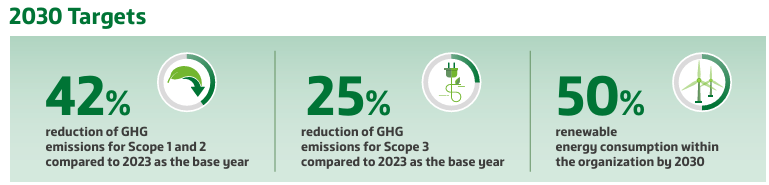
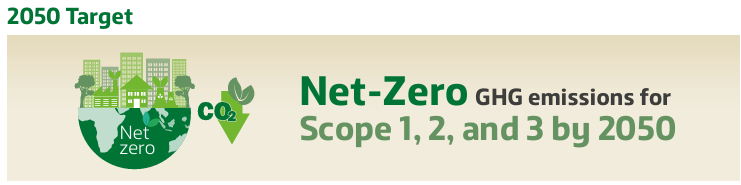
These initiatives aim to expand the use of renewable and lower-carbon energy, improve energy efficiency, reduce reliance on fossil fuels, and lower GHG emissions across ThaiBev’s operations. The investment supports progress toward ThaiBev’s 2030 science-based GHG emissions reduction targets and its ambition to achieve net-zero emissions by 2050.
The identified amount represents ThaiBev’s current quantified near-term investment target for FY2026. The Company’s long-term investment target is under development, as ThaiBev continues to assess emerging technologies and identify solutions that are technically and commercially suitable for each production process and business operation. Additional investments will be considered through the annual capital planning and investment approval processes, taking into account project feasibility, emissions-reduction potential, business priorities, technological developments, and regulatory requirements.
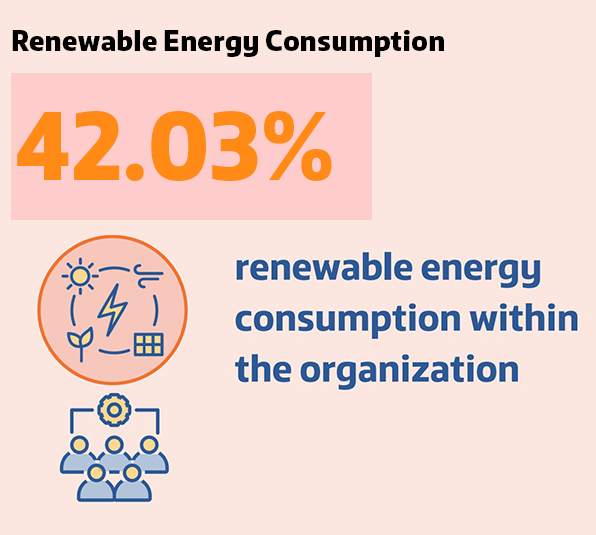
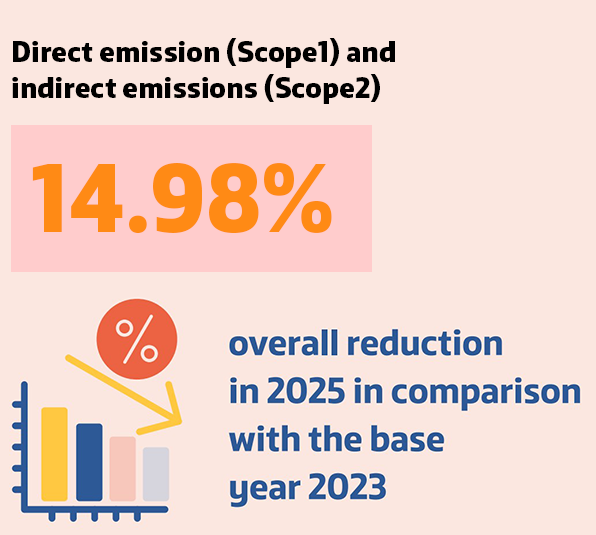
In 2025, ThaiBev achieved a 11 percent reduction in total Scope 1 and 2 greenhouse gas (GHG) emissions compared to the base year 2023. This achievement encompasses GHG emissions from the organization’s manufacturing plants, offices, and other operations, with comprehensive coverage of Thai and international facilities. Renewable energy projects contribute significantly to global efforts to reduce reliance on fossil fuels, decrease GHG emissions, and build a more sustainable energy future. We achieved significant renewable energy consumption of 36.73 percent. We have implemented the following projects:
- Renewable Energy Projects: Solar panels, biogas, and biomass projects
- GHG Emissions Reduction Projects: Enclosed flare, electrical forklifts
- Energy Efficiency Projects: installing high-efficiency motor systems, increasing of condensate return, and air conditioning management.
ThaiBev is dedicated to continuously enhancing its greenhouse gas (GHG) emissions reduction efforts by conducting comprehensive assessments across the product life cycle. These assessments align with key principles such as improving energy efficiency, transitioning to renewable energy sources, and optimizing operational processes. Additionally, the company develops strategic GHG reduction plans and rigorously monitors emissions across all manufacturing facilities. ThaiBev aims to maintain or further reduce its overall emissions over the next two years, in line with its target to achieve a 42% reduction in GHG emissions by 2030 compared to the 2023 baseline.
Total cost of response for mitigation In 2025, we spent 679.86 million Baht on energy-saving and renewable projects. These projects include expenditures aimed at reducing GHG emissions.
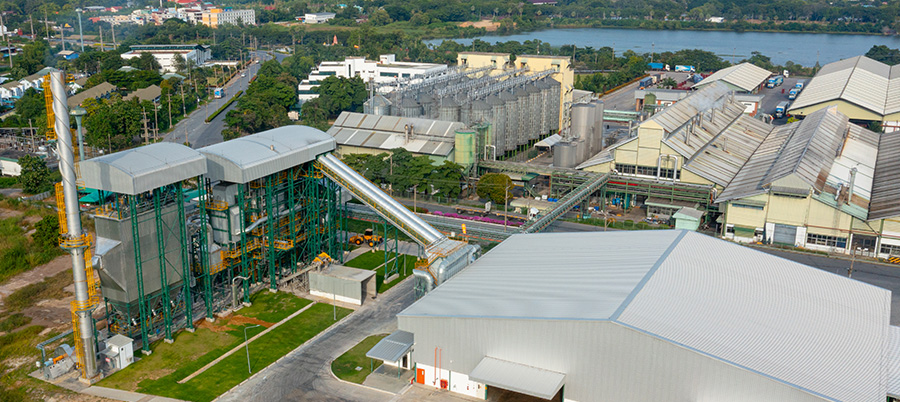
ThaiBev constructed additional biogas plants and commenced operations in 2025 at three distilleries: Thanapakdi in Chiang Mai Province, Mongkolsamai in Uttaradit Province, and Luckchai in Ratchaburi Province, with a total investment of 418.27 million Baht. The project is expected to reduce heavy fuel oil consumption for steam production by approximately 1.7 million liters per year, equivalent to 19.8 million Baht per year, and lower GHG emissions by around 3,313 tonnes CO2e.
At present, ThaiBev operates 13 biogas plants at its distilleries, which utilize by-products from alcohol distillation, and an additional three biogas plants at breweries that produce steam from methane gas captured from wastewater treatment systems. Altogether, these biogas facilities help reduce dependence on fossil fuels, resulting in an estimated GHG emission reduction of 47,498 tonnes CO2e per year and annual energy cost savings of approximately 283.82 million Baht
Biomass Plants
ThaiBev currently has two biomass boiler plants in Thailand and Myanmar. The boilers use organic materials such as wood chips, wood pellets, rice husks, and palm shells. The biomass boiler in Thailand is also designed to be able to use waste labels, sludge from wastewater treatment, and tea-leaf residue for steam generation to replace fossil-fuel energy. These biomass boilers produce 1,016,650,800 megajoules (MJ) of thermal energy, leading to a reduction in heavy oil and coal consumption for steam production by 1.10 million liters and 37.67 million kilograms, with a GHG emissions reduction of 95,276 tonnes CO2e per year. In addition, this biomass can reduce waste to landfills.
Enclosed Flare
ThaiBev has upgraded our flare system from an open flare to an enclosed flare with an investment of 24.35 million Baht. This improvement significantly reduces methane leakage, one of the potent greenhouse gases, resulting in a reduction of GHG emissions by approximately 76,265 tonnes CO2 in 2025.
Scope 2
Solar Energy Project
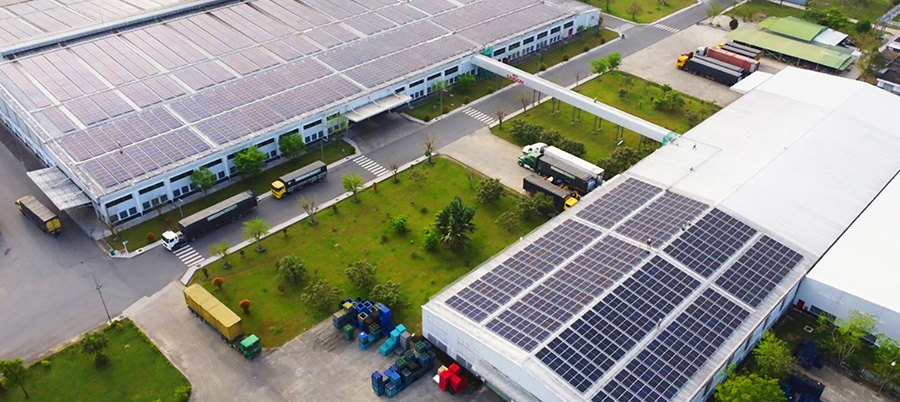
The solar energy project covers the installation of solar rooftops and floating solar panels in Thailand, Myanmar, Vietnam, Singapore, and Malaysia. The installation has been completed with a total capacity of 87.51 MWp (Megawatt peak). In FY2025, the installed solar panels can generate 83,519 Megawatt hours (MWh), which reduces the cost of electricity purchased from the grid by 301.68 million Baht and lowered GHG emissions by 41,178 tonnes CO2e.

Scope 3
Sustainable Packaging Design
ThaiBev has implemented a wide range of sustainable packaging initiatives to reduce environmental impacts and promote circular economy principles across its packaging portfolio. For glass packaging, the company has introduced lightweight bottles using the Narrow Neck Press & Blow (NNPB) process, reducing material use while maintaining product quality. In aluminum packaging, ThaiBev has reduced the gauge of aluminum cans and lids to enhance recyclability and lower material consumption, and also implemented a recyclable aluminum bottle with a screw cap containing nearly 80 percent recycled content for Chang Unpasteurized Beer. Paper-based packaging efforts include optimizing corrugated cartons and inserts, introducing reusable inserts, replacing Masonite sheets with Corrugated Fiber Board in selected SKUs, and minimizing the thickness and dimensions of paper to reduce non-recyclable waste. For plastic packaging, ThaiBev has introduced 100 percent recycled PET (rPET) bottles for est Cola 515 ml and Borneo Spring. The company has also redesigned plastic bowls, trays, and other food-delivery packaging to use less material while maintaining product quality. To improve recyclability and reduce non-recyclable plastics, ThaiBev has transitioned from PVC to PET for cap seals and labels and implemented innovative designs such as perforated shrink sleeves, tethered caps for Oishi Green Tea and Crystal Drinking Water, and mono-layer packaging for Oishi Eato meals. Collectively, these initiatives demonstrate ThaiBev’s commitment to resource efficiency, circularity, and sustainable packaging management across its diverse product portfolio.
To ensure that ThaiBev's climate-related risks are appropriately identified and managed in line with the goals of the ThaiBev Group Net-Zero Transition Plan, we have established processes to engage relevant internal and external stakeholders on the climate agenda. These engagements help us gather valuable insights and feedback that inform our climate strategy and support the integration of climate-related considerations into our overall business planning and operations.The company acknowledges the importance of managing climate-related risks, as well as maximizing the opportunities from climate change, to ensure a sustainable long-term future for its food and beverage operations. In doing so, ThaiBev engages with direct and indirect value-chain partners to help them align their activities with the Paris Agreement and international best practices.
ThaiBev recognizes the need to accelerate its actions to address the climate crisis, while contributing to global efforts to limit the global temperature increase to below 1.5 °C as part of its contribution to the Paris Agreement, and improving the company’s resilience to potential climate impacts. We are committed to achieving Net-zero GHG emissions by 2050. ThaiBev has been verified and declared a certified organization by the Science Based Targets initiative (SBTi), for its short-term GHG emissions reduction target for 2030 and its long-term net-zero GHG emissions target for 2050.
Agricultural commodities
-
Supplier development program for our key agricultural commodities
ThaiBev strengthens sustainable agriculture by combining responsible sourcing, supplier capability development, and water resilience across the priority farming regions with high water-stress risk. In FY2025, 100 percent of key agricultural raw materials in Thailand were responsibly sourced, and supplier performance was advanced through targeted engagement and data-driven oversight.
ThaiBev sources key agricultural inputs, including malt, hops, sugar, broken rice, tea leaves, and palm oil, under internationally recognized standards such as Bonsucro, RSPO, FSA, SAI Platform, SEDEX/SMETA, and Rainforest Alliance. These requirements are embedded in supplier screening, assessment, and the bidding process to ensure responsible production and continuous improvement.
To build supplier capability where it matters most, ThaiBev provides bilateral technical support on GHG accounting and disclosure to priority suppliers. In FY2025, Cristalla, a key sugar supplier, progressed from Beginner to Competence level following a focused engagement on GHG accounting practice and data quality improvement. Beyond Tier 1, ThaiBev continued community support with non-Tier 1 farmers in sugarcane and beer value chains, focusing on practical guidance for water stewardship and soil-health-oriented regenerative practices that reduce dependence on synthetic inputs and strengthen livelihoods.
To strengthen water resilience in agricultural sourcing regions, ThaiBev partners with the Hydro-Informatics Institute (Public Organization) (HII) to use data from automated telemetry statiors for water disaster monitoring and flood surveillance. The use of this data is being extended to supplier farming areas identified as water-stressed, enabling continuous water-level tracking and more efficient water use. These actions enhance climate preparedness and protect raw-material continuity while supporting farming communities.
Together, these measures ensure that ThaiBev’s agricultural materials are responsibly sourced, performance-managed, and climate-resilient, contributing to better environmental outcomes, stronger communities, and progress on Scope 3 GHG emissions management.
In addition, ThaiBev incorporates carbon performance into our sourcing decisions to incentivize suppliers with better carbon footprints. Key Commodity suppliers must disclose their product carbon footprints and near-term reduction actions. The carbon footprint and traceability are factors in supplier selection, with those demonstrating stronger performance recognized as preferred suppliers.
Business Partner
-
Train the Trainer Program on Business Sustainability and Climate Change
ThaiBev collaborates with strategic business partners to enhance supplier development through the Thailand Supply Chain Network (TSCN). This collaboration includes inviting partners to attend training and seminar sessions organized by the Thailand Sustainability Academy (TSA). In 2024, the TSA successfully held a training class on the topic “Train the Trainer Program on Business Sustainability and Climate Change” at the Queen Sirikit National Convention Center, Bangkok. The event featured guest speakers from leading consulting firms specializing in sustainable business development, aimed at strengthening the capabilities of business partners. The session saw participation by more than 56 attendees representing 9 TSCN Co-Founders.
Association
ThaiBev supports two major Trade Associations in Thailand, namely The Federation of Thai Industries (FTI) and Thai Chamber of Commerce (TCC). And our executives have been assigned positions in Executive Boards of both associations.
|
Name
|
Position
(ThaiBev)
|
Trade Association
|
Position
(Trade Association)
|
|
Kosit Suksingha
|
Chief Operating Officer (Thailand) and Non-Alcoholic Beverage Business |
FTI |
Vice President |
| TIPMSE (of FTI) |
President |
| Orathai Poonsup |
Chief Supply Chain Management (Thailand) |
TIPMSE (of FTI) |
Vice President |
| Sakdipat Suvarnazorn |
Assistant Vice President for Thai Beverage Logistics, and anaging Director for HAVI Company |
TCC |
Deputy Secretary General |
In addition, ThaiBev also assign representative from Group Sustainability and Risk Management team to sit in The Circular Economy and Environment Committee, a core division within the Thailand Chamber of Commerce (TCC) that plays a pivotal role in steering Thailand's private sector toward sustainable business practices and green economic models, and bridges the gap between environmental responsibility and market competitiveness. Through participation in trade associations, ThaiBev engages in shaping environmental-related policies and are able to align policy-influencing activities with its sustainability commitments as well as the Paris Agreement.
ThaiBev has been actively engaging in developing the Extended Producer Responsibility (EPR) law in Thailand. EPR principles are included in Thailand’s Plastic Waste Management Plan for 2019–2030 and the national agenda of resource management in the circular economy as part of the BCG Economic Model that supports Thailand roadmap to achieve Net Zero.
In December 2021, ThaiBev and its subsidiaries, joined a consortium in ‘The Intention Declaration of Extended Producer Responsibility’ to drive EPR through the PACKBACK program. Endorsed by the Ministry of Higher Education, Science, Research and Innovation (MHESI), the Ministry of Natural Resources and Environment, and the Ministry of Interior, the program has successfully been implemented on a pilot scale in Chonburi province, Thailand, since January 2022. The consortium consists of more than 70 parties including producers, retailers, recyclers, local government organizations, and research institutes in demonstrating the potential of EPR for the management of packaging waste. ThaiBev, as one of the major drivers of the EPR scheme, is in charge of managing PACKBACK pilot project in Chonburi province, and data collection on glass recycling to support the development of a national packaging database. The initiative also aims to explore local engagement in alignment with the responsibilities of a Producer Responsibility Organization (“PRO”). Through TIPMSE’s pilot projects, a collaborative network has been established with key organizations such as PPP Plastic, PRO Thailand Network, and Al Loop. In 2025, a voluntary EPR operation to collect used packaging will be tested, with the goal of gaining valuable lessons and providing recommendations to the government for establishing a suitable framework for Thailand.
Government
ThaiBev Group CEO, and Chief Sustainability and Strategy, also participated in ‘Climate Action Leaders (CAL) Forum’ organized by Thailand Greenhouse Gas Management Organization (TGO) of the Ministry of Natural Resources and Environment (MONRE). The objectives of CAL Forum are to promote climate action literacy on the state of the climate crisis, and to create a communication platform for leaders from all sectors to exchange ideas and experiences on GHG emission reduction strategy. At the end of the Forum, participants propose (Draft) Communication and (Draft) Declaration of Intent on Thailand Climate Action to achieve Net Zero and Carbon Neutral targets to the Minister of MONRE, which includes recommendations for climate-related policies such as Carbon Pricing, Green Taxonomy, Sustainable Finance, and establishment of Climate Change Department under the MONRE. The new department’s mission will be to set up policy, strategy and measures to deal with climate change and reduce greenhouse gas emissions in the country.
Assessment of Social implication
ThaiBev recognizes that implementing its Climate Transition Plan may create both positive and negative social implications for employees, suppliers, local communities, and other stakeholders. The transition toward renewable energy, low-carbon technologies, resource-efficient production, and more sustainable supply chains may require changes in job responsibilities, workforce capabilities, operating practices, and supplier requirements.
ThaiBev considers these potential implications through its existing stakeholder engagement, human capital, occupational health and safety, supplier management, and community development processes. Particular attention is given to employees and small or local suppliers that may require additional support in adapting to new technologies and sustainability requirements.
|
Climate Transition Action by ThaiBev
|
Potential Social Impact
|
Action Plan
|
| Increased use of solar power |
Growing stakeholder expectations for clean energy may increase pressure to accelerate solar power installations. This transition, with rapid solar deployment, may create shortages of qualified workers, leading to longer hours, heavier workloads, fatigue, and a higher risk of occupational health and safety incidents during the installation and maintenance of solar power systems. |
ThaiBev will expand solar power installations through a responsible, phased approach that considers site readiness, workforce capacity, and operational requirements. The company will engage qualified contractors, manage working hours appropriately, and ensure compliance with occupational health and safety and fair labor practices. Relevant workers will receive appropriate training, personal protective equipment, and adequate supervision to minimize installation and maintenance risks. |
| Reduced fossil fuel utilization |
The transition away from fossil fuels may affect the long-term job security and employability of workers in fossil-fuel-related activities and supply chains |
Collaborate with relevant government agencies, industry partners, and suppliers to assess workforce impacts and provide appropriate reskilling, upskilling, and employment-transition support. |
| Increased recycling e.g., through Thai Beverage Recycle Co., Ltd. |
Expanding packaging collection and recycling may expose workers—particularly informal workers and those further upstream from ThaiBev’s direct business partners—to risks related to unfair wages, unsafe working conditions, limited social protection, and unequal treatment. |
Map and assess the packaging collection and recycling value chain; engage business partners to verify waste sources and working conditions; incorporate fair labor, human rights, and occupational health and safety requirements into supplier standards; conduct risk-based audits; support capacity-building for collection and recycling partners; and require corrective actions where adverse impacts are identified. |